
Past News

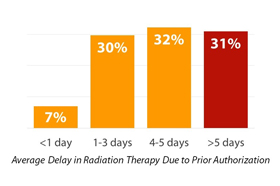
New ASTRO survey finds that prior authorization delays lead to serious harm for people with cancer
December 4, 2024A new nationwide survey of more than 750 radiation oncologists confirms that prior authorization harms people with cancer by causing treatment delays, abandoned treatments, hospitalizations and patient deaths. Findings also make clear that the problem of prior authorization is growing worse, with patients now experiencing longer radiation therapy treatment delays than during the height of the COVID-19 pandemic. Results of the survey, the latest in a series from the American Society for Radiation Oncology (ASTRO), reinforce the urgent need for Congress to pass prior authorization reform legislation and prevent further harm to people with cancer.

ASTRO issues update to clinical guideline on radiation therapy for rectal cancer
November 25, 2024The American Society for Radiation Oncology (ASTRO) issued today an updated clinical guideline for physicians who use radiation therapy to treat patients with locally advanced rectal cancer. This update incorporates new data on patient selection and best practices from several practice-changing clinical trials published since the prior guideline was issued in 2020. The updated ASTRO guideline is published in Practical Radiation Oncology.

ASTRO celebrates contributions to radiation oncology with 2024 Gold Medals and other awards
October 10, 2024The American Society for Radiation Oncology (ASTRO) recognized the recipients of its 2024 Gold Medal awards and other high-profile honors during an awards ceremony at the 66th ASTRO Annual Meeting in Washington, DC. Photos of the awardees and the ceremony are available online.

IMRT and proton therapy offer equally high quality of life and tumor control for people with prostate cancer
September 30, 2024People with low- and intermediate-risk prostate cancer treated with either of two types of contemporary radiation therapy — proton beam therapy or intensity modulated radiation therapy (IMRT) — achieved equally high rates of tumor control with no differences in patient-reported quality of life, according to a first-of-its-kind phase III clinical trial comparing the two technologies. Findings of the PARTIQoL trial will be presented today at the American Society for Radiation Oncology (ASTRO) Annual Meeting.

Spiritual themes, distrust may factor into Black patients’ reluctance to participate in cancer clinical trials
September 30, 2024Spiritual beliefs and a historically-based distrust of clinical research may factor into Black patients’ decisions about whether to participate in cancer trials, according to surveys of patients treated at two Baltimore medical centers. Findings will be presented today at the American Society for Radiation Oncology (ASTRO) Annual Meeting.This cross-sectional, descriptive study sought to shed light on what might be contributing to the growing underrepresentation of Black people in cancer trials and identify ways in which researchers might improve recruitment efforts so their findings can be generalizable to more diverse populations.

Existing standard chemoradiation superior to deintensification approaches for HPV-related oropharyngeal cancer
September 30, 2024Researchers looking to de-intensify radiation treatments for people with early-stage, HPV-associated oropharyngeal cancer to prevent long-term side effects halted a large, randomized phase II/III trial after patients in the control arm reached a record high, two-year progression-free survival rate of 98%. De-intensified treatments involving a lower radiation dose and immunotherapy in place of chemotherapy did not perform as well as the more rigorous chemoradiation approach. Findings of the NRG Oncology HN005 trial will be presented today at the American Society for Radiation Oncology (ASTRO) Annual Meeting.

Timing matters when adding immunotherapy to chemoradiation for patients with limited-stage small cell lung cancer
September 30, 2024People with limited-stage small cell lung cancer may benefit from adding immunotherapy to chemoradiation, but not if both treatments are given at the same time, new research finds. The results suggest that the timing of when immunotherapy is given plays a key role in its ability to extend survival. Findings of the multi-institutional phase III trial, which also found that twice-daily radiation treatments offer greater survival benefits than once-daily treatment, will be presented today at the American Society for Radiation Oncology (ASTRO) Annual Meeting.

Post-mastectomy radiation therapy can be shortened by nearly half for patients planning breast reconstruction
September 30, 2024An accelerated course of radiation therapy does not increase complications for patients who undergo breast reconstruction following a mastectomy, new research shows. Findings of the large, phase III RT CHARM trial (Alliance A221505) will be presented today at the American Society for Radiation Oncology (ASTRO) Annual Meeting. While radiation therapy following mastectomy to remove breast cancer is known to improve survival rates for certain patients who are at higher risk of recurrence, RT CHARM is the first multi-institutional international study to show that a shorter course of post-mastectomy radiation, combined with breast reconstruction, is safe and effective.

People who experience side effects from cranial radiation therapy may recover full neurocognitive function within months
September 29, 2024A substantial number of patients with brain metastases who experience cognitive side effects following radiation therapy may fully regain cognitive function, according to a pooled analysis of three large, phase III clinical trials. Recovery was more likely for people treated with conformal, or highly targeted, radiation techniques, compared to standard whole-brain treatment. The findings will be presented today at the American Society for Radiation Oncology (ASTRO) Annual Meeting.
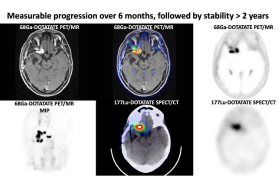
Radiopharmaceutical therapy offers promise for people with tough-to-treat meningioma brain tumors
September 29, 2024A substantial number of patients with brain metastases who experience cognitive side effects following radiation therapy may fully regain cognitive function, according to a pooled analysis of three large, phase III clinical trials. Recovery was more likely for people treated with conformal, or highly targeted, radiation techniques, compared to standard whole-brain treatment. The findings will be presented today at the American Society for Radiation Oncology (ASTRO) Annual Meeting.

ASTRO awards early career radiation oncology scientists with research grants and fellowships
September 18, 2024The American Society for Radiation Oncology (ASTRO) today announced the recipients of its 2024 research grants and fellowships, including awards co-sponsored by the American Cancer Society (ACS), the LUNGevity Foundation, the Melanoma Research Alliance (MRA), the American Association of Physicists in Medicine (AAPM), the RTOG Foundation/NRG Oncology and AstraZeneca. Through these strategic partnerships, these awards recognize and support the outstanding efforts of early career researchers in the fields of radiation oncology and medical physics.
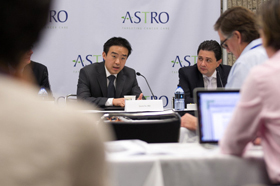
Radiation oncology research and clinical trial results to be featured at ASTRO’s Annual Meeting in Washington
September 4, 2024The American Society for Radiation Oncology (ASTRO) announced today the seven studies to be highlighted in the 2024 ASTRO Annual Meeting press program. Researchers will discuss their findings in news briefings held September 30 and October 1 at the Walter E. Washington Convention Center in Washington, D.C. and via live webcast. Reporters can register to attend the briefings and join the Annual Meeting virtually or in person.

Dr. Neha Vapiwala voted President-elect of the American Society for Radiation Oncology (ASTRO)
July 17, 2024The members of the American Society for Radiation Oncology (ASTRO) recently elected five new officers to ASTRO’s Board of Directors: Neha Vapiwala, MD, FASTRO, as President-elect; Jean Wright, MD, FASTRO, as Clinical Affairs & Quality Council Vice Chair; Andrea Ng, MD, MPH, FASTRO, as Education Council Vice Chair; Christopher Corso, MD, PhD, as Government Relations Council Vice Chair; and Malika Siker, MD, FASTRO, as Health Equity, Diversity and Inclusion (HEDI) Council Vice Chair. The officers will begin their terms October 1 at ASTRO’s 66th Annual Meeting in Washington, DC.

ASTRO urges legislative action as reimbursement cuts continue in proposed FY25 MPFS
July 11, 2024The American Society for Radiation Oncology (ASTRO) issued the following statement from Jeff M. Michalski, MD, MBA, FASTRO, Chair of the ASTRO Board of Directors, in response to the proposed 2025 Medicare Physician Fee Schedule (MPFS) released yesterday: “The declines in reimbursement for radiation therapy services for people with cancer under the Medicare physician fee schedule are disappointing. We are concerned that CMS continues to undervalue the impact of cost-effective radiation treatments for cancer and urge Congress to act on bipartisan radiation oncology payment reform legislation this year."

Radiation oncology leaders awarded ASTRO Fellow designation
July 10, 2024The American Society for Radiation Oncology (ASTRO) selected 48 distinguished members to receive the ASTRO Fellow (FASTRO) designation for its 2024 class of Fellows. These physician leaders will be recognized at an awards ceremony in Washington, D.C. on Tuesday, October 1 during ASTRO’s 66th Annual Meeting. The ASTRO Fellows program recognizes individuals who have made substantial contributions to the Society and to the field of radiation oncology through research, education, patient care and service to the field.

Dr. Vivek S. Kavadi named CEO of the American Society for Radiation Oncology (ASTRO)
June 20, 2024The American Society for Radiation Oncology (ASTRO) announced today that following a nationwide search, Vivek S. Kavadi, MD, MBA, FASTRO will become CEO of the Society effective November 1, 2024. Dr. Kavadi, a radiation oncologist and ASTRO member since 1994, steps into the role from his current position as Chief Radiation Oncology Officer for The US Oncology Network. He will succeed Laura Thevenot, who previously announced her intent to retire after leading the organization since 2002.

ASTRO issues clinical guideline on radiation therapy for patients with HPV-related throat cancer
June 18, 2024The American Society for Radiation Oncology (ASTRO) published today an updated clinical guideline that details best practices for using radiation therapy to treat patients who have oropharyngeal squamous cell carcinoma (OPSCC) caused by the human papillomavirus (HPV). Recommendations address radiation therapy as a standalone curative treatment or in combination with surgery and/or chemotherapy. The guideline is available as a free-access article in Practical Radiation Oncology, ASTRO’s clinical practice journal.

ASTRO applauds new bipartisan legislation to reform prior authorization for Medicare Advantage patients
June 12, 2024The American Society for Radiation Oncology (ASTRO) applauded today’s introduction of bipartisan federal legislation to address critical flaws in the prior authorization process. The Improving Seniors’ Timely Access to Care Act of 2024, introduced by Senators Roger Marshall, MD (R-Kan.), Kyrsten Sinema (I-Ariz.), John Thune (R-S.D.) and Sherrod Brown (D-Ohio) and Representatives Mike Kelly (R-Pa.), Suzan DelBene (D-Wash.), Ami Bera, MD (D-Calif.) and Larry Bucshon, MD (R-Ind.), is an important step toward improving care delivery for people with cancer nationwide.

ASTRO clinical guideline on radiation therapy for bone metastases emphasizes patient-centered care
May 23, 2024The American Society for Radiation Oncology (ASTRO) published an updated clinical guideline that details best practices for treating patients who have symptomatic bone metastases and ways to improve their quality of life. The guideline is available as a free access article in Practical Radiation Oncology, ASTRO's clinical practice journal.

American Society for Radiation Oncology (ASTRO) to host Annual Meeting in Washington, D.C., September 29-October 2
May 16, 2024Registration opens today for the American Society for Radiation Oncology's (ASTRO) 66th Annual Meeting, which will be held at the Walter E. Washington Convention Center in Washington, D.C., September 29 – October 2, 2024. Led by ASTRO President Howard Sandler, MD, FASTRO, the conference is expected to attract up to 10,000 oncologists, clinicians, researchers and other healthcare professionals from around the globe.

Bipartisan bill to modernize radiation oncology reimbursement introduced in Congress
May 15, 2024Today marks a significant milestone in cancer care with the introduction of bipartisan federal legislation that would revolutionize Medicare reimbursement for radiation therapy. The Radiation Oncology Case Rate (ROCR) Value-Based Payment Program Act of 2024, sponsored by Sen. Thom Tillis (R-N.C.) and by Reps. Brian Fitzpatrick (R-Pa.), Jimmy Panetta (D-Calif.), John Joyce, MD (R.Pa.) and Paul Tonko (D-N.Y.), would protect access to high value cancer treatments for patients across the country, enhance patient outcomes and reduce health disparities while generating savings for Medicare.

Noteworthy studies to be presented at the 2024 Multidisciplinary Head and Neck Cancers Symposium
February 29, 2024Research on patient-centered treatment of head and neck cancers will be presented at the 2024 Multidisciplinary Head and Neck Cancers Symposium, which takes place in Phoenix and online today through March 2.

2024 Multidisciplinary Head and Neck Cancers Symposium to be held in Phoenix and online Feb. 29 – Mar. 2
January 31, 2024The 2024 Multidisciplinary Head and Neck Cancers Symposium will take place February 29 to March 2 in Phoenix and via livestream for virtual attendees. The meeting is cosponsored by the American Society for Radiation Oncology (ASTRO), the American Society of Clinical Oncology (ASCO), the American Head and Neck Society (AHNS) and the Society for Immunotherapy of Cancer (SITC).

Radiation oncology physician groups unite to ensure patient access to cancer care
January 9, 2024Today, the largest professional societies representing radiation oncology physicians in the United States announced a partnership with the goal of reforming radiation oncology Medicare payments to expand and enhance access to high quality care for people with cancer. Leaders of the American College of Radiation Oncology (ACRO), the American College of Radiology (ACR), the American Society for Radiation Oncology (ASTRO) and the American Society of Clinical Oncology (ASCO) stressed the need for a unified approach to create meaningful change on this critical issue.

American Society for Radiation Oncology (ASTRO) CEO Laura Thevenot announces 2024 retirement
January 8, 2024The American Society for Radiation Oncology (ASTRO) today announced that CEO Laura Thevenot plans to retire at the end of 2024 after leading the organization since 2002. “It has been my privilege to work on behalf of our ASTRO members these past 22 years. Serving as ASTRO’s CEO has given me an opportunity to collaborate with the incredible members of our Board of Directors and volunteers to expand and enhance how we serve our members. In addition, I have been fortunate to work with a team of dedicated staff who are committed to our mission. ASTRO is thriving because of our volunteers’ and staff’s commitment to do the best possible work on many fronts to help our members and the patients they serve. I am deeply appreciative of our volunteers and members and will continue our focused efforts until I retire at the end of the year,” said Thevenot.

Dr. Rachel Jimenez named editor-in-chief of Advances in Radiation Oncology, ASTRO’s open access journal
December 6, 2023The American Society for Radiation Oncology (ASTRO) announced today that Rachel Jimenez, MD, will become the new editor-in-chief of Advances in Radiation Oncology, ASTRO's gold open access journal. Dr. Jimenez, an associate professor of radiation oncology at Harvard Medical School and the chair of quality and safety in radiation oncology at Mass General Cancer Center, will begin her five-year term in March 2024. Dr. Jimenez will succeed Robert C. Miller, MD, MBA, FASTRO, who has served as editor-in-chief since the journal was founded in 2015.

ASTRO applauds appointment of Dr. W. Kimryn Rathmell as National Cancer Institute director
November 30, 2023The American Society for Radiation Oncology (ASTRO) today expressed its support for President Joe Biden’s intended appointment of W. Kimryn Rathmell, MD, PhD, as director of the National Cancer Institute (NCI), with the following statement from Jeff M. Michalski, MD, MBA, FASTRO, Chair of the ASTRO Board of Directors.

ASTRO issues patient-centered clinical guideline on partial breast irradiation for early-stage invasive breast cancer and DCIS
November 15, 2023The American Society for Radiation Oncology (ASTRO) issued today a clinical guideline on partial breast irradiation for patients with early-stage invasive breast cancer or ductal carcinoma in situ (DCIS). For the guideline, experts in breast cancer compiled evidence—including several recently published large, randomized clinical trials—to provide guidance on which patients can benefit from partial breast radiation, as well as best practices to deliver the treatment effectively.
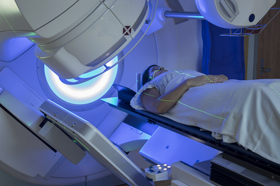
ASTRO and ESTRO call for action: Maintaining the cycle of innovation in radiation oncology
November 6, 2023Joint statement from ASTRO and ESTRO on the importance of technological innovation in radiation oncology, the differences in development cycles for drugs and technology, and the potential risks of unsuccessful innovations for radiation therapy. The societies also issue a call for action to safeguard patient care and innovation in radiation oncology.

Medicare physician payment final rule cements more cuts to radiation oncology, underscores need for legislative fix
November 2, 2023The American Society for Radiation Oncology (ASTRO) issued the following statement in response to the final 2024 Medicare Physician Fee Schedule (MPFS) released today: “ASTRO is deeply disappointed that CMS finalized an additional 2% cut to reimbursement for radiation therapy in today’s MPFS final rule. The consistent decline in Medicare reimbursement for radiation oncology threatens to undermine patients’ access to vital cancer care across the country. The time has come for Congress to intervene with reform legislation to ensure short-term stability and long-term viability."

ASTRO celebrates contributions to radiation oncology with 2023 Gold Medals and other awards
October 26, 2023The American Society for Radiation Oncology (ASTRO) recognized the recipients of its 2023 Gold Medal awards and other high-profile honors during an awards ceremony at the 65th ASTRO Annual Meeting in San Diego. Photos from the ceremony are available online.

PROSPECT trial expands treatment options for patients with resectable rectal cancer
June 7, 2023The American Society for Radiation Oncology (ASTRO) Gastrointestinal Cancers Resource Panel issued the following statement today regarding the PROSPECT clinical trial for patients with rectal cancer.

ASTRO and ESTRO issue clinical guideline on local therapy for oligometastatic lung cancer
April 25, 2023A new clinical guideline from the American Society for Radiation Oncology (ASTRO) and European Society for Radiotherapy & Oncology (ESTRO) provides guidance on the use of definitive local therapy — including radiation and surgery — to treat patients with oligometastatic non-small cell lung cancer (NSCLC). The guideline is published in Practical Radiation Oncology.

ASTRO issues updated guideline on radiation therapy for endometrial cancer
December 7, 2022A newly updated clinical guideline from the American Society for Radiation Oncology (ASTRO) provides recommendations on the use of radiation therapy and systemic therapy after surgery to treat patients with endometrial cancer. The guideline is published in the January/February 2023 issue of Practical Radiation Oncology.

ASTRO issues clinical guideline on radiation therapy for IDH-mutant glioma
August 31, 2022A new clinical guideline from the American Society for Radiation Oncology (ASTRO) provides recommendations on the use of radiation therapy to treat patients with isocitrate dehydrogenase (IDH)-mutant grade 2 and grade 3 diffuse glioma. Evidence-based recommendations outline the multidisciplinary planning and delivery techniques to manage this subset of central nervous system (CNS) tumors.

ASTRO issues clinical guideline on radiation therapy for brain metastases
May 10, 2022A new clinical guideline from the American Society for Radiation Oncology (ASTRO) provides guidance on the use of radiation therapy to treat patients with brain metastases from non-hematologic solid tumors. The update to ASTRO’s original 2012 guideline is published in Practical Radiation Oncology.

ASTRO issues clinical guideline on external beam radiation therapy for primary liver cancers
January 12, 2022A new clinical guideline from the American Society for Radiation Oncology (ASTRO) provides guidance on the use of radiation therapy to treat adult patients with primary liver cancers using external beam radiation therapy (EBRT). Evidence-based recommendations outline indications and optimal EBRT dosing, techniques and treatment planning for patients with hepatocellular carcinoma (HCC) and intrahepatic cholangiocarcinoma (IHC), with a strong emphasis on multidisciplinary care.

ASTRO urges Congress to pass legislation delaying RO Model and protecting Medicare beneficiaries' access to care
December 7, 2021ASTRO response to the Supporting Healthcare Providers During the COVID-19 Pandemic Act, which includes a provision to delay the start of the Radiation Oncology Alternative Payment Model (RO Model): "While we are grateful for the delay, our focus remains on the reforms needed for the model to be successful. ... This delay creates a critical window of opportunity for Congress to address the RO Model’s flaws."
CMS 2022 final rules: ASTRO deeply concerned and disappointed, emphasizes need for legislative solution
November 2, 2021The American Society for Radiation Oncology (ASTRO) issued the following statement today from Laura Dawson, MD, FASTRO, Chair of the ASTRO Board of Directors, in response to the 2022 Medicare Physician Fee Schedule (MPFS) and Hospital Outpatient Prospective Payment System (HOPPS) final rules announced by the Centers for Medicare and Medicaid Services (CMS).

Prior authorization costs radiation oncology clinics more than $40 million each year, study estimates
October 25, 2021The time required to secure prior authorization approvals for radiation therapy treatments equates to a financial impact of more than $40 million annually for academic medical centers, according to a new study. Findings will be presented today at the American Society for Radiation Oncology (ASTRO) Annual Meeting.

ASTRO issues clinical guideline on radiation therapy for soft tissue sarcoma in adults
July 27, 2021A new clinical guideline from the American Society for Radiation Oncology (ASTRO) provides guidance on the use of radiation therapy to treat adult patients with soft tissue sarcoma (STS).

ASTRO survey: Fewer patient visits despite enhanced COVID-19 safety measures for radiation oncology clinics
May 20, 2020Despite facing challenges such as limited access to PPE during the COVID-19 outbreak, radiation oncology clinics quickly implemented safety enhancements that allowed them to continue caring for cancer patients, according to a new national survey from the American Society for Radiation Oncology (ASTRO). All 222 physician leaders in the survey collected April 16-30 said their practices continued to provide radiation therapy, yet 85% also reported declines in patient visits, by an average of one-third.

ASTRO applauds new prior authorization legislation to reduce cancer patient burden and delays
June 5, 2019On behalf of the nation’s radiation oncologists and the more-than one million cancer patients in their care this year, the American Society for Radiation Oncology (ASTRO) applauded today’s introduction of bipartisan federal legislation that would rein in restrictive prior authorization practices that unnecessarily delay patient access to critical cancer treatments.