
Special Report: CEO Year in Review
By Vivek S. Kavadi, MD, MBA, FASTRO, ASTRO Chief Executive OfficerAs I look back on my first full year as CEO of ASTRO, I am proud to share the progress we’ve made and the vision guiding us forward. As I stated last year, I set forth with seven initiatives to guide our progress for the year, and I will use that framework to share a recap of 2025.
My journey began with a commitment to engage deeply with our members, listen to their feedback, and ensure ASTRO remains a driving force in advancing radiation oncology.
Member Outreach
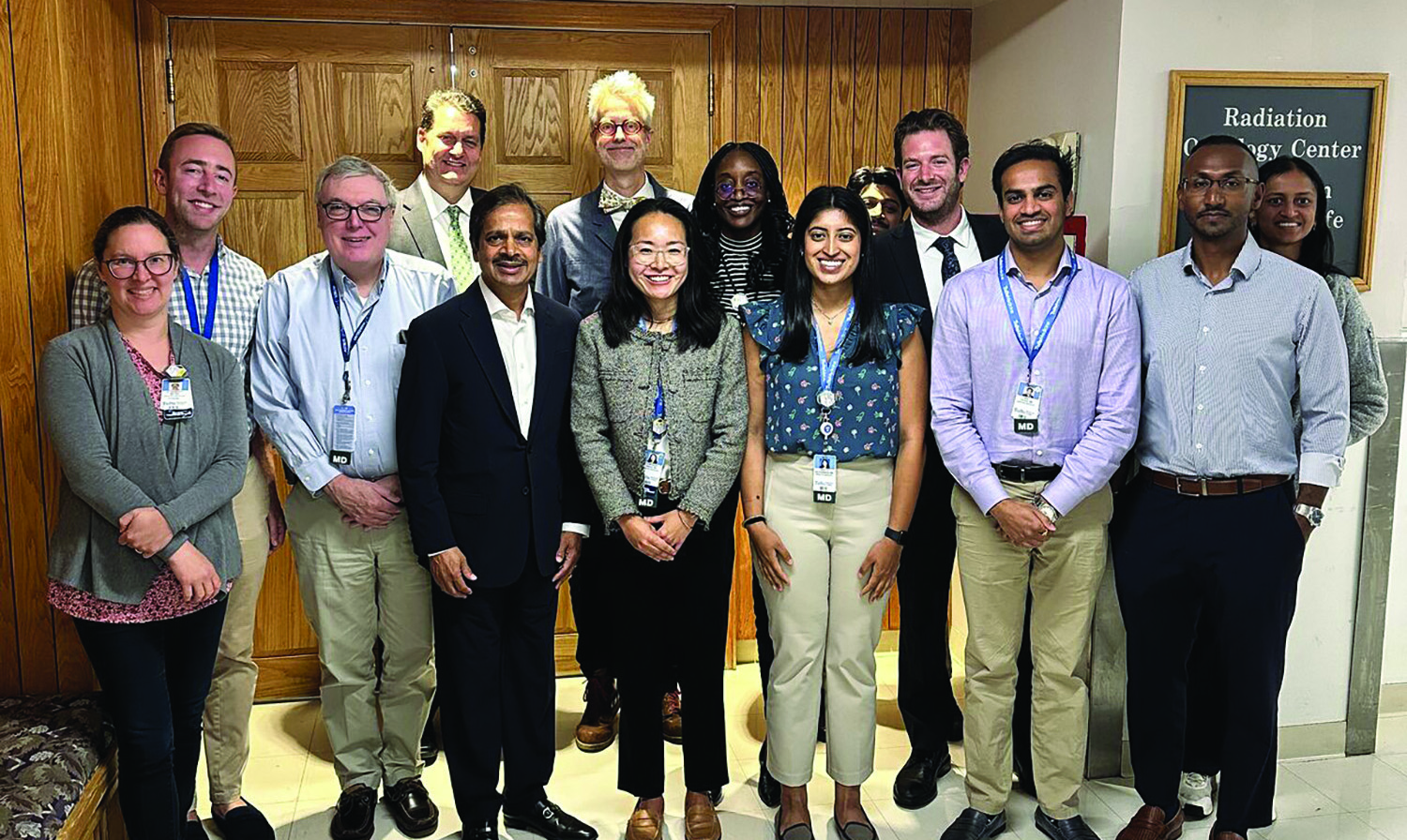
The lifeblood of any association is a healthy and growing membership base. It is the most critical metric that drives everything ASTRO does for its members. Over the past year, I traveled across the country on a coordinated member outreach campaign, visiting community practices, academic centers, hospitals and free-standing clinics. My goal was to share my vision and, more importantly, to hear directly from our members about how ASTRO can best serve them. The feedback was clear: our members want ASTRO to focus on science and education, recruit the best medical students to join our field, and continue to advocate strongly for our specialty.Public Policy and Advocacy
Leadership in advocacy remains one of ASTRO’s core services in support of the specialty. The need for the Radiation Oncology Case Rate (ROCR) program is no less relevant today than before the final rules were released. Payment stability and predictability are essential for investment and innovation in our field. Fair and adequate reimbursement is not merely to compensate physicians and hospitals but also to drive innovation and better patient care. There is a critical interdependence between clinical need, innovation and reimbursement. ASTRO’s advocacy team continues to work tirelessly to garner support for this important bill, and we encourage you to join us in late April for the 2026 Advocacy Day to share your stories and advocate for the field.Value of Radiation Oncology
One of my goals as CEO is to ensure the value of radiation oncology is understood. To that, we launched the Economics of Oncology project, led by Drs. Nancy Keating and Miranda Lam of Harvard Medical School. The project aims to evaluate the value of oncology care spending in the U.S. and identify opportunities to improve patient access to high-value treatments. The two-year study is underway and uses SEER-Medicare and commercial claims data, focusing on data from patients with newly diagnosed cancers of the prostate, breast, lung, colon/rectum, head and neck, ovary, endometrium, and cervix between 2015 and 2021. Key measures will include total spending, treatment utilization rates, survival outcomes, and practice-level characteristics. The project will conclude with a final report presented at the ASTRO 2027 Annual Meeting. The data will guide smarter resource allocation and policy decisions.Financial Viability of the Society
Every conversation about budgets and resources should always start with the why: what is our mission and how can we best utilize our resources to reach our goals, not only now but also for the future generations of ASTRO. ASTRO’s financial strategy is built to ensure a strong financial foundation, so that the Society is able to invest in the services our members rely on today, while also strategically positioning the field for long-term success, ensuring ASTRO is strong and in good shape for multiple generations to come.
International Growth and Global Engagement
I have set out to strengthen ASTRO’s position as a leading global society to increase influence and impact, enhance educational initiatives and international collaborations, and most importantly, address healthcare disparities.Twenty-two percent of ASTRO membership is outside of the United States, representing more than 100 countries around the globe, and I have set a goal to increase that to 30% in the next several years. We are also actively strengthening partnerships with international societies. This past November, I signed a Memorandum of Understanding (MOU) with the Association of Radiation Oncologists of India (AROI) during their 45th Annual Meeting in Kolkata and in September, announced the 2025-2026 class of ASTRO International Ambassadors. Learn more about this program and see the ambassadors on page 8. I will be going to Jinan, China, to speak at the Chinese Society of Clinical Oncology meeting and to sign a MOU with them as well.
Expanding the Scope of the Specialty
We are seeing continued growing interest among members in expanding their practice by using radiation therapy for noncancerous indications. Not only was it the theme for the 2025 Annual Meeting, but in the third quarter of 2025, ASTRO formed a working group to further support these efforts. The group is tasked with developing more educational resources and symposia and is divided into three subgroups (musculoskeletal, inflammatory and skin; CNS and functional neurology; cardiac). We plan to launch a workshop at this year’s Annual Meeting focused on functional radiation medicine.We have also made significant strides in radiopharmaceutical therapy (RPT), with newly launched learning collaboratives, the Beyond the Beam webinar series and the well-attended annual workshops at the Annual Meeting. ASTRO also published the Quality and Safety Considerations for RPT in the Radiation Oncology Environment white paper in Practical Radiation Oncology.1
For the past two years, ASTRO has hosted collaborative RPT roundtables to enable open discussions with industry and ASTRO members. From these meetings, two major initiatives were identified and are now coming to fruition in 2026: Authorized User Training Centers (see more on these on page 17), and our first-ever dedicated RPT symposium scheduled for February 2026!
Support and Advancement of Science and Innovation
Science and research transform today’s challenges into tomorrow’s treatments. And with that in mind, ASTRO and the foundation formerly known as the Radiation Oncology Institute (ROI), have combined efforts to better support scientific research and patient education. Speed of Light – The ASTRO Foundation, officially launched January 1, 2026, with a new name and brand, and the goal to greatly amplify our current efforts in scientific funding, patient education and innovation. See more on page 11 from Gita Suneja, MD, MSHP, FASTRO, President, Board of Trustees, Speed of Light – The ASTRO Foundation.2025 was a year of growth for ASTRO. I look forward to continuing to serve as your CEO to enhance these initiatives and implement new ones as we continue to propel the specialty forward. Here’s to 2026!
References
- Zoberi JE, Charara Y, Clements J, et al. Quality and Safety Considerations for Radiopharmaceutical Therapy in the Radiation Oncology Environment: An ASTRO Safety White Paper. Pract Radiat Oncol. 2025;15(5):428-450.