Reflections on ASTRO – and the Road Ahead
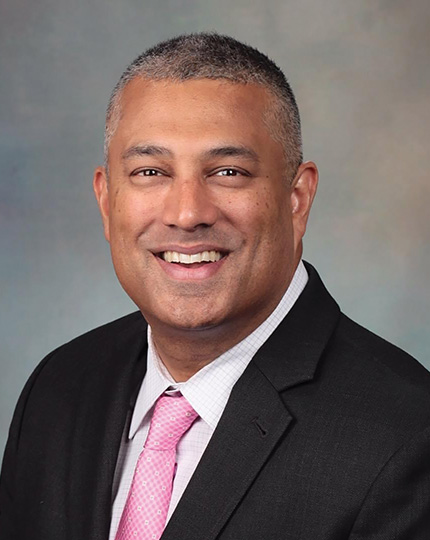
By Sameer Keole, MD, FASTRO, ASTRO CHAIRThese are my first columns as ASTRO Board Chair. When you are elected to the ASTRO presidential track, you commit to a four-year term with four distinct roles: President-Elect, President, Board Chair, and Past Chair. I am now in the third of those four years and will serve as Board Chair until the ASTRO Annual Meeting in Boston this fall.
I wanted to take a moment to reflect on how far ASTRO has come — and just as importantly, to consider where we must go next.
When I began my term in 2023, my two highest priorities were payment reform to stabilize the field, particularly freestanding radiation oncology centers, and expanding the indications for radiation medicine. I also hoped to take a thoughtful look at our COI policies, industry relationships, workforce challenges, community representation, public perception of radiation therapy, and collaboration with other societies, both domestically and globally. I am pleased to say that we have made meaningful progress across all of these areas.
Over the past two and a half years, additional issues have risen to the forefront, including scope-of-practice concerns, tele-radiation oncology, ensuring ASTRO’s long-term financial stability, and supporting our members as they navigate increasing prior authorization burdens. These are not isolated challenges; they reflect a rapidly evolving practice environment that requires continued engagement and adaptability.
Perhaps the most common question I am asked centers on payment reform and payment stability. In 2026, radiation oncology will undergo the most significant code set revision in over a decade, eliminating the historical distinction between 3D conformal therapy and IMRT for treatment delivery. While the distinction remains in treatment planning, the new delivery codes are designed to reflect treatment intensity and time demands rather than technology labels.
Equally important, ASTRO achieved a foundational advocacy success for the reimbursement of these codes under Medicare. Beginning in 2026, hospital outpatient data (HOPPS) will be used to inform the Physician Fee Schedule (MPFS) payments for the revised treatment delivery codes. This is a significant, positive change. Historically, MPFS rates for radiation therapy delivery have steadily declined, while hospital outpatient payments have increased. While this change is not a site-neutral payment policy, the link to HOPPS data is a positive step toward payment stability for these services. Achieving site-neutral payments is a pillar of the Radiation Oncology Case Rate legislation, aka ROCR, which will continue to be ASTRO’s top legislative priority in 2026. That said, it is unlikely that we would have seen such a foundational shift in payment without our ongoing ROCR advocacy.
A central theme of my presidential track tenure has been expanding the indications for radiation medicine. This was the focus of the 2025 Annual Meeting in San Francisco, titled Rediscovering Radiation Medicine and Exploring New Indications. The Presidential Symposium highlighted the role of radiotherapy in nonmalignant disease, what we have termed functional radiation medicine, as well as the expanding role of radiation medicine physicians in radiopharmaceutical therapy and across the broader healthcare ecosystem.
Education and workforce development remain core priorities for the ASTRO Board. Our field is evolving, and ASTRO must continue modernizing educational content, supporting emerging professional roles, and ensuring that radiation medicine remains an attractive and sustainable career path. In 2026, we will launch radiopharmaceutical Centers of Excellence for training and host our first dedicated radiopharmaceutical meeting this February in Palm Desert, California.
I encourage you to reach out to me, other members of the ASTRO Board, or ASTRO staff with questions or concerns. I make it a priority to respond — often by phone — because open dialogue strengthens our society.
Thank you for allowing me to serve as your ASTRO Board Chair. I am grateful for your engagement and optimistic about the path ahead.