Giants of Radiation Oncology: Biographical sketches from the ASTRO History Committee
A Doctoral Dissertation That Changed Radiation Oncology
By Paul E. Wallner, DO, FASTRO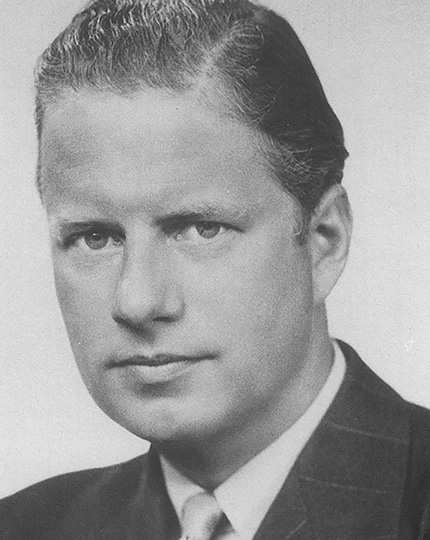
During the first half of the twentieth century, almost immediately following Wilhelm Röntgen’s initial identification of X-rays, and the Curies of radium, scientists and clinicians began to investigate the use of the new discoveries for cancer therapy. Nowhere were developments more remarkable than in Sweden. Clinicians, including Sjögren, Stenbeck, Forsell, Heyman and Sievert made clinical, biologic and technical observations and discoveries that significantly advanced the discipline.
In 1910, national policies and philanthropy enabled creation of the Radiumhemmet (radium home), the first facility devoted to the non-surgical management of cancer. The Radiumhemmet was later incorporated into the Karolinska Institutet (Royal Caroline Institute) that evolved into the medical school of the University of Stockholm. Noteworthy among these early masters of radiation medicine was Gösta Forsell, chair of the Karolinska Institutet Department of Medical Radiology, founder and first director of the Radiumhemmet and president of the Svenska Cancerföreningen (Swedish Cancer Society). Forsell’s greatest impact on radiation medicine may have been his recognition of the talent and potential of one of his students, Magnus Strandqvist.
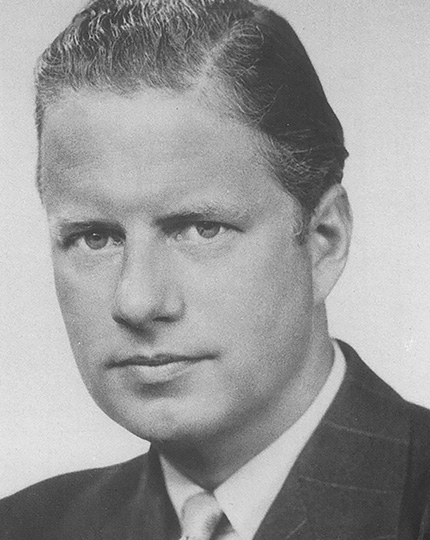
Strandqvist was born in Skövde, 215 miles southwest of Stockholm. He was one of six siblings in a blended family; his mother having remarried following the death of her husband. Although Strandqvist’s father had been born into poverty, he became a successful importer of fine food and wine, and the children were exposed to the arts, especially music, sailing and his father’s wares. Magnus was a talented artist and intended to pursue a career in art, but his father objected, so he enrolled in the Tekniska Högskola (Technical College) of Stockholm majoring in architecture, for which he quickly lost interest. Having no strong career direction at that point, his older half-brother Birger, a senior medical student at the Karolinska Institutet, suggested that he enroll in the medical school, which he did, despite having no real previous contact with the profession. He performed well academically in medical school while at the same time pursuing his interest and talent in art, providing the anatomical drawings for a surgery textbook and publishing two volumes of satirical caricatures of his professors and classmates. In 1938, he provided the first set of illustrations for the League of Nations Health Organization cancer staging manual.
In 1931, Strandqvist received his medical bachelor’s degree from the University of Stockholm, and the following year, began training at the Radiumhemmet, where one of his mentors was James Heyman, who went on to become a leader in gynecologic radiation and inventor of the Heyman capsules that were the backbone of endometrial cancer therapy for decades. In 1934, Strandqvist joined the staff of the Radiumhemmet as an assistant attending physician.
During his early years at the Radiumhemmet, Strandqvist focused on general clinical care and external beam treatments (then referred to as roentgen therapy). His non-clinical focus was on technical improvements in orthovoltage technology and gadgets to improve radiation delivery, including light sources for beam direction and shaping, and a radium-filled esophageal bougie for management of local mediastinal recurrence. In the late 1920s and early 1930s, radiation medicine clinicians used a variety of regimens for total delivered dose, number of fractions, fraction size, and total elapsed days for treatment delivery, without consensus or scientific confirmation of any of these parameters.
In addition, radiation dose was reported in visual observation of time to development of surface erythema, termed tissue erythema dose (TED). Comparisons between regiments were hampered by interobserver inconsistency of TED quantification, variability in machine outputs and exposure times, and lack of instrumentation for precise dose measurement. Standard measurements of absorbed dose were inconceivable and would not be possible for decades.
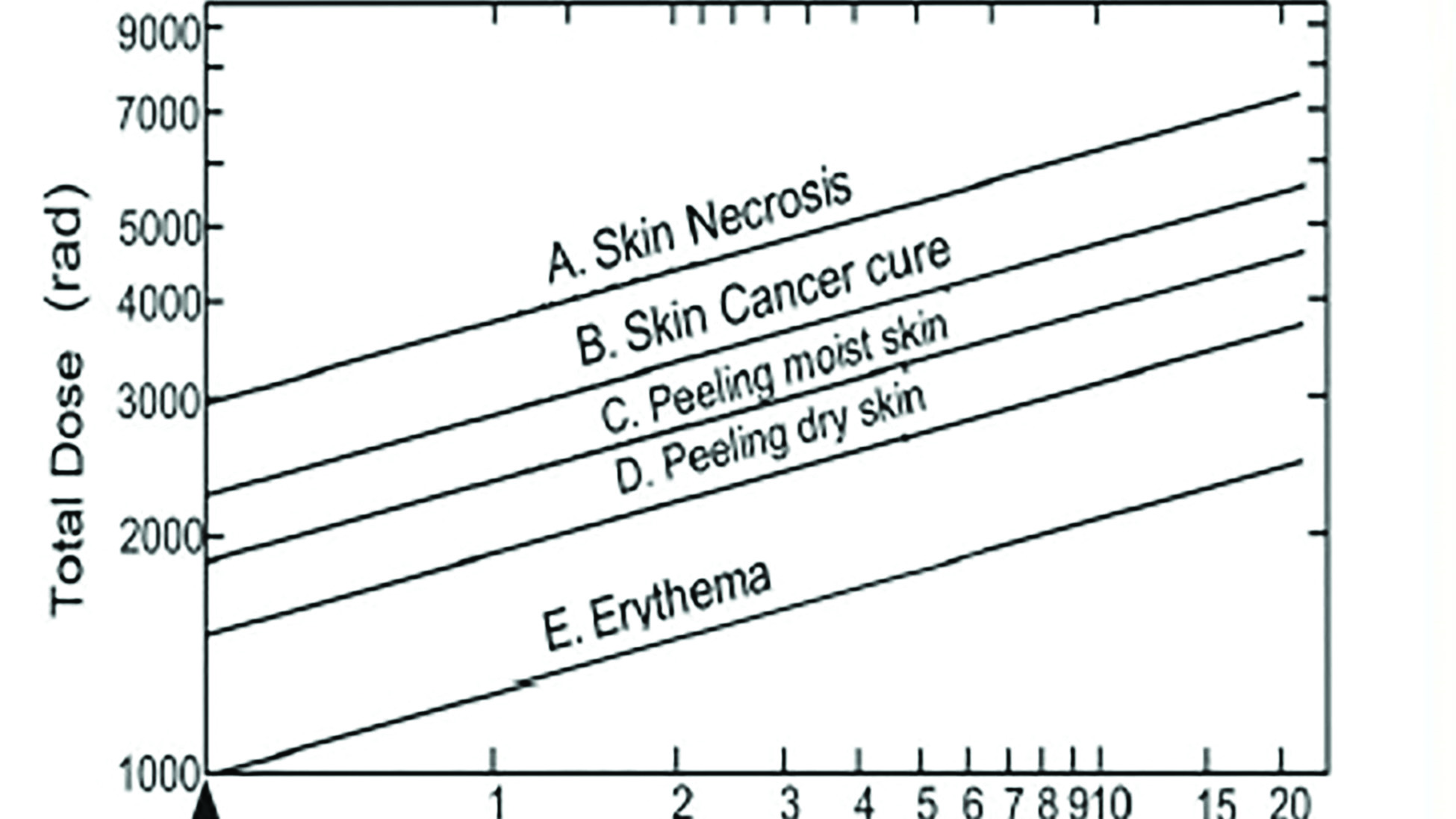
Strandqvist explored the relationship between dose and fractionation for the first time. In his 300-page doctoral dissertation which was published in 1944, Strandqvist reported his retrospective review of 280 patients treated with orthovoltage radiation for cutaneous basal cell and squamous cell carcinomas between 1934 through 1942. Patients had been treated with a variety of total doses, daily doses and elapsed days. He meticulously reviewed each case, including patient and treatment parameters, precise drawings of treated lesions, and careful description of outcomes, including local control, time to recurrence and toxicity.
As with many clinicians of his era, Strandqvist’s clinical and research work was interrupted by World War II, and from 1942-1944, he served as a radiologist in the Swedish army. In 1943, a new cancer center, King Gustav V Jubilee Clinic, was established in Göteberg, Sweden’s second largest city. Strandqvist was recruited to be director of the center, which had been fashioned after the Radiumhemmet. He accepted the position and served for a decade until he was recruited to become a professor of radiation therapy at the University of Göteberg School of Medicine. Based on his activities and renown, and the esteem in which he was held by his contemporaries, he was named to the steering committee of the International Club of Radiation Therapy, the forerunner of other national and international radiation oncology societies.
During his early years at the Radiumhemmet, Strandqvist met and ultimately married Irma Skogberg, the daughter of one of his patients. They had two daughters and a son. Throughout his adult life, he was an avid sailor, both alone and in larger crewed vessels. He was a sought-after host and gourmet cook, thoroughly enjoyed entertaining, continued to draw, and was a respected pianist. In 1964, he began to demonstrate early signs of Parkinson’s disease and as it progressed, he withdrew from his clinical and administrative activities, essentially spending the last 14 years of his life as a recluse.
By modern standards, Strandqvist’s professional career of only 30 years was relatively brief, and his many administrative responsibilities and non-medical interests precluded prolific publications, but his doctoral dissertation had a profound impact on the field of radiation oncology and our concepts of dose delivery. Although his work was later criticized for its focus solely on cutaneous malignancies, variations in tumor size, elapsed days (generally 16 or fewer), and for the relatively low number of recurrences and complications (specifically cutaneous necrosis) in the evaluated cohort, the work had an undeniable impact on generations of radiation oncologists and their concepts of time, dose and fractionation.
Strandqvist was well aware of the shortcomings of his dissertation, “The purpose of this study is not to establish definite figures but to present working methods with the help of which future investigations may yield a better understanding of fractionation.” The tables he created, which plotted time against dose and fractions for tumor control and normal tissue complications became the gold standard for time and dose decision making for over a quarter century, and formed the foundation for our modern understanding of timing and dose as well as established a baseline for fractionation-related research.
References
- Kajanti, MJ, Magnus Strandqvist: 50th anniversary of his doctoral thesis. Acta Oncolog. 1994; 33 (7): 735-738.
- Strandqvist, M. “Studien uber die kumulative Wirkung der Rontgenstrahlen bei Fraktionierung. Erfahrungen aus dem Radiumhemmet an 280 Haut- und Lippenkarzinomen ("Studies on the cumulative effect of X-rays in fractionation. Experiences from the radium inhibitor on 280 skin and lip carcinomas). Acta Radiol. 1944; (Suppl. 55): 1-300.
- Bentzen, SM and Thames, HD. A 100-year nordic perspective on the dose-time problem in radiobiology. Acta Oncolog. 1995; 34:8, 1031-1040, DOI: 10.3109/02841869509127230
- Del Regato, JA. Magnus Strandqvist. Int J Radiat Oncol Biol Phys. 1989; 17 (3): 631-642
- Olsson, CE, Lindberg, J., Holmstrom, P, et al. Radiation Therapy in Sweden: Past, Present, and Future Perspectives. Int J Radiat Oncol Biol Phys. 2020; 107 (1): 6-11..