

Dr. Beth Erickson elected President of the American Society for Radiation Oncology (ASTRO)
Medical society members also elect officers to lead clinical affairs, education, government relations and healthcare access councils
ARLINGTON,Va., July 29, 2026
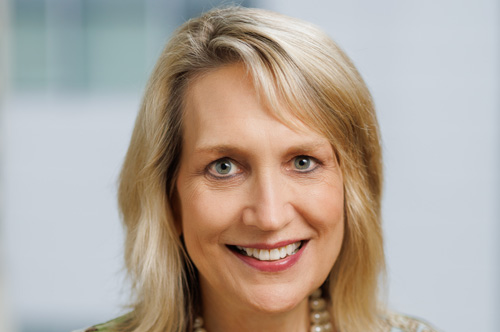
The members of the American Society for Radiation Oncology (ASTRO) recently elected five new officers to ASTRO’s Board of Directors:
- President-elect: Beth Erickson, MD, FASTRO
- Clinical Affairs and Quality Council Vice Chair: Indrin Chetty, PhD, FASTRO
- Education Council Vice Chair: Kenneth Rosenzweig, MD, FASTRO
- Government Relations Council Vice Chair: John Suh, MD, FASTRO
- Healthcare Access and Community Engagement Council Vice Chair: Gita Suneja, MD, FASTRO
These officers will begin their terms on September 29 at ASTRO’s 68th Annual Meeting in Boston. Dr. Erickson will first take office as President-elect and then assume the presidency in September 2027. ASTRO’s Board represents the medical society’s 10,000 members around the globe, including physicians, medical physicists, biologists, radiation therapists and other professionals who treat patients for cancer and other diseases using radiation therapies.
Dr. Beth Erickson is the J. Frank and Vera B. Wilson Professor of Radiation Oncology at the Medical College of Wisconsin, where she serves as chief of brachytherapy services and specializes in treating patients with gynecologic, gastrointestinal and eye/orbital cancers. An internationally recognized expert in brachytherapy and image-based treatment planning, Dr. Erickson has lectured on these subjects across the United States and abroad.
Dr. Erickson’s extensive service to ASTRO includes her tenure on the ASTRO Board as Education Council Chair, as well as chair of the Society’s Annual Refresher Course Committee and other educational and leadership roles. She also chaired the task force that developed ASTRO’s clinical guideline for endometrial cancer and is currently leading its focused update.
"ASTRO is at our strongest when every member of the radiation oncology team can find meaningful ways to participate and grow throughout their career,” said Dr. Erickson. "Education has long been one of our greatest strengths, and it will be essential as our field continues to evolve. As ASTRO President, I will be committed to showing patients and the broader medical community what radiation therapy can achieve, while advocating for fair reimbursement policies that support excellent care."
Other key priorities for Dr. Erickson include ensuring ASTRO continues to be a welcoming professional home for the entire radiation oncology care team, with meaningful opportunities to contribute and connect at every career stage. She also plans to expand the Society’s educational offerings and support researchers through grant training and funding opportunities. Other areas of focus include working to raise the visibility of radiation therapy's curative power and advocating for reimbursement policies that support guideline-concordant care and keep treatment decisions in the hands of patients and physicians.
Dr. Indrin Chetty, the incoming Clinical Affairs and Quality Council Vice Chair, is a professor and vice chair of research in the department of radiation oncology at Cedars-Sinai Medical Center, where he also directs the medical physics division. Dr. Chetty currently serves as Vice Chair of ASTRO’s Clinical Affairs and Quality Committee and recently co-chaired the Society’s guidance on adaptive radiation therapy safety. He also has been heavily involved in ASTRO’s work with the U.S. Department of Veterans Affairs on radiation therapy quality measures. During his tenure on ASTRO’s Board, Dr. Chetty will help guide quality and safety initiatives for radiation oncology, including practical standards for adopting artificial intelligence and other rapidly evolving technologies.
Dr. Kenneth Rosenzweig, the incoming Education Council Vice Chair, is a professor and chair of the department of radiation oncology at the Icahn School of Medicine at Mount Sinai, where he specializes in treating patients with lung cancer. Dr. Rosenzweig currently chairs ASTRO’s Annual Meeting Scientific Committee and led the task force that developed the Society’s small cell lung cancer guideline. He has served as radiation oncology residency program director at two different institutions, and he also served on the Accreditation Council for Graduate Medical Education committee that oversees radiation oncology training. In his new Board role, Dr. Rosenzweig will focus on supporting professional development at every career stage and helping the specialty adapt to a rapidly changing healthcare environment.
Dr. John Suh, the incoming Government Relations Council Vice Chair, is a professor and enterprise chair of the department of radiation oncology at Cleveland Clinic, where he specializes in treating patients with brain tumors. Dr. Suh currently chairs the ASTRO’s Government Relations Committee and previously served on the U.S. Nuclear Regulatory Commission’s Advisory Committee on the Medical Uses of Isotopes. During his Board tenure, Dr. Suh will help lead efforts to advance the Radiation Oncology Case Rate (ROCR) Act and secure reimbursement policies that protect patient access to radiation therapy. He also will advocate for federal research support and policies that foster emerging applications of radiation therapy for noncancerous conditions.
Dr. Gita Suneja, the incoming Healthcare Access and Community Engagement (HACE) Council Vice Chair, is a professor of radiation oncology and an adjunct professor of population health sciences at the University of Utah’s Huntsman Cancer Institute, where she specializes in treating patients with breast and gynecologic cancers. Dr. Suneja currently chairs ASTRO’s HACE Steering Committee and serves as President of the Board of Trustees of Speed of Light – The ASTRO Foundation. An NIH-funded health services researcher, she has published more than 140 papers on access to high quality cancer care, work that has helped shape international scientific priorities and clinical guidelines. In her new Board role, she will focus on reducing barriers to radiation therapy and strengthening ASTRO’s engagement with communities, as well as supporting mentorship and research opportunities for trainees and early-career professionals.
ABOUT ASTRO
The American Society for Radiation Oncology (ASTRO) is the world’s largest professional society dedicated to advancing radiation medicine, with 10,000 members including physicians, nurses, physicists, radiation therapists, dosimetrists and other professionals who work to improve patient outcomes through clinical care, research, education and advocacy. Radiation therapy is integral to 40% of cancer cures worldwide, and more than one million Americans receive radiation treatments for their cancer each year. For information on radiation therapy, visit Speed of Light – The ASTRO Foundation. To learn more about ASTRO, visit our website and press room and connect with us on social media.
