

Access to Care
Background:
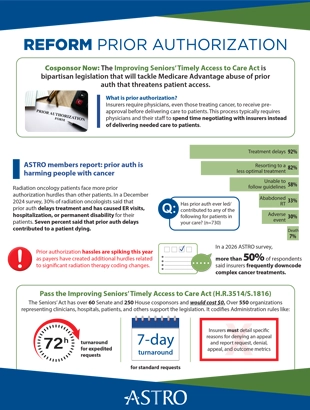
Prior authorization continues to be a top issue hindering clinician’s ability to provide timely care. This cumbersome process requires physicians to obtain pre-approval for medical treatments or tests before rendering care to their patients. The process for obtaining this approval is lengthy and typically requires physicians or their staff to spend time negotiating with insurance companies — time that would be better spent taking care of patients.
Radiation oncology and cancer patients have been particularly hard hit by this unnecessary burden and interference in care decisions. Radiation Oncology Benefit Managers (ROBMs) oversimplify the process of individual patient care management and abrogate the professional and personal judgments of physicians and patients.
By the numbers:
- 93% of radiation oncologists said their patients’ lifesaving treatments are delayed due to prior authorization.
- 31% said the average delay lasts longer than five days — an entire week of standard radiation treatments.
- Separate research has linked each week of delay in starting cancer therapy with a 1.2% to 3.2% increased risk of cancer death.
- A study estimated that prior authorization costs radiation oncology clinics $40 million per year.
- In 2022 HHS OIG reported that 18% of MA claims were improperly denied, despite meeting Medicare’s own guidelines; and over 80% of denials were overturned on appeal anyway.
- MA prior auth is burdensome, takes us away from our patients and is an ineffective waste of Medicare dollars.
ASTRO’s Solution:
Ensure patients and RadOncs make care decisions.
- For cancer patients who receive RT, prior auth restrictions can delay care for days or weeks.
- Prior auth = treatment delay; treatment delay = increased cancer mortality.
- Prior auth restrictions are unproductive, impractical, and fruitless: 82% of prior auth appeals were ultimately approved anyway.
- Physicians often spend hours away from patients to argue with insurance staff, leading to wasted time and burnout.
What Congress is doing:
- 2026: The Improving Seniors’ Timely Access to Care Act has been reintroduced with overwhelming bipartisan support, including 295 House cosponsors. The Energy and Commerce Subcommittee on Health advanced the bill during a June 25 markup, an important step toward full committee action and consideration on the House floor.
- The Seniors’ Act also has strong bipartisan support in the Senate, with 71 cosponsors backing the legislation, underscoring growing momentum for passage in both chambers.
Reform Prior Authorization
As various healthcare reforms and plans are discussed in Congress and as part of the upcoming elections, focus should center around protecting cancer patient access to affordable healthcare.
Arlington, VA 22202
Telephone: 703-502-1550