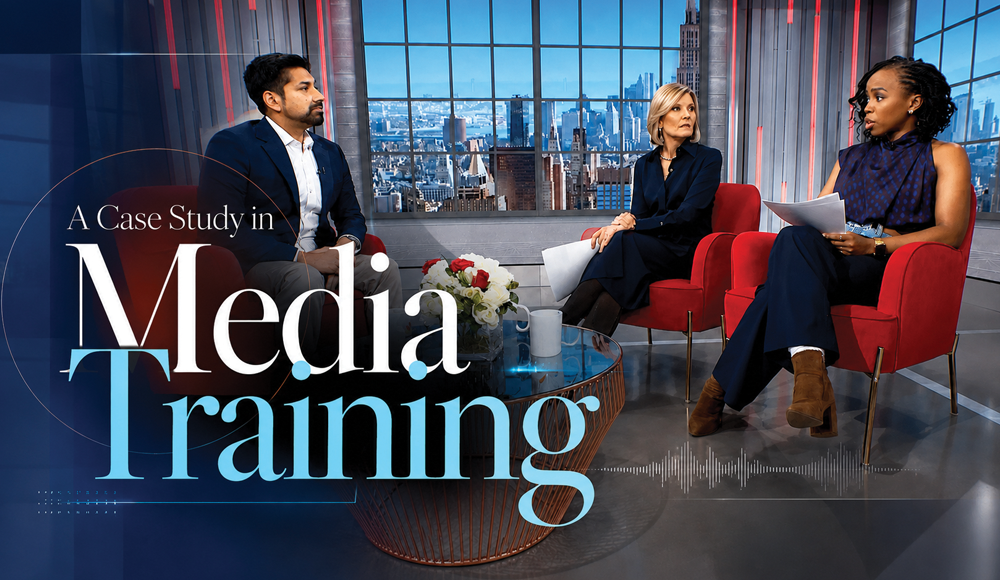
A Case Study in Media Training
By Amar Rewari, MD, MBA, FASTRO
Over the past year, I've had the opportunity to represent radiation oncology in a growing number of national media appearances. Some were live. Some were taped. Some involved bright studio lights, countdown clocks and producers speaking rapidly into earpieces.
And, fortunately for the purposes of this article, not all of them went perfectly.
The funny thing about media training is that it sounds incredibly simple when someone explains it to you. Make eye contact. Keep your answers short. Stay on message. Don't say "um." Smile. Use hand gestures. Look relaxed.

Then a camera turns on. Suddenly you become acutely aware of your hands, your posture, your blinking frequency, and whether your face has always looked like that from the side.
Like many physicians, I initially approached media interviews the same way I approached lectures. I knew the science. I knew the facts. Surely that would be enough.
It turns out television has different ideas.
One of my earlier national interviews provides a perfect example. Looking back at the footage now, I can see exactly what was happening. My eyes occasionally drifted away from the camera. A question arrived in a different order than I expected, briefly knocking me off balance. I was concentrating so hard on getting the facts right that I probably looked more nervous than I felt.
The audience never sees what is happening behind the scenes. They don't know the producer changed the order of questions 30 seconds before airtime. They don't know you're listening to instructions through an earpiece while trying to remember your key messages. They just see what appears on screen.
Which brings me to one of the most important lessons I've learned: television is not about knowing more. It's about communicating better.
Physicians are trained to be comprehensive. Television rewards clarity.
A great interview answer is often shorter than feels comfortable. It usually contains one key message, one memorable fact, and a phrase people might actually remember after the segment is over.

Another lesson: preparation matters far more than inspiration.
The interviews that went best were almost never the ones where I felt most confident beforehand. They were the ones where I had practiced my key points, anticipated difficult questions, and thought about how to translate medical jargon into plain English.
And yes, appearance matters.
I wish I could tell you that viewers are evaluating only the quality of your evidence-based recommendations. In reality, television is television. A well-fitted jacket, a good haircut and decent lighting all make a difference.
The good news is that these are learnable skills.
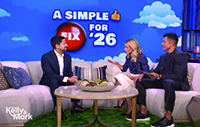
When I compare some of my earlier interviews with more recent appearances, including a segment on "Live with Kelly and Mark," I can see the difference. Better eye contact. More relaxed body language. Shorter answers. Fewer filler words. More confidence. Most importantly, less effort spent trying to sound smart and more effort spent trying to be understood.
Viewers are remarkably forgiving. They don't expect perfection. They just want to understand what you're saying and trust that you know what you're talking about.
Every time one of us appears on national television, we're not just representing ourselves. We're representing radiation oncology. Most viewers have never met a radiation oncologist before. In many cases, we're introducing the specialty to them for the first time.
That is both a responsibility and a privilege.
And if you occasionally cringe while watching your old interviews, congratulations. It probably means you're getting better.
Dr. Rewari's media appearances can be found at AmarRewari.com and on LinkedIn at @AmarRewariMDMBA. He also shares educational content on cancer prevention, screening and radiation oncology across social media at @DoctorAmarExplains.
The Perils and Promise of Podcasting
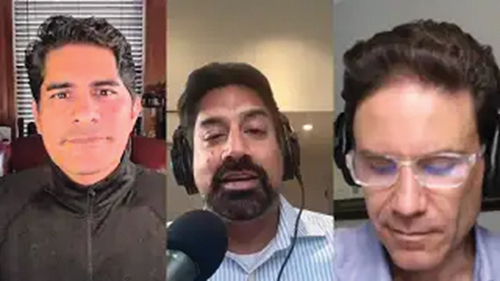
Dr. Rewari’s partner in punditry is Anthony Paravati, MD, MBA, with whom he co-hosts the Value Health Voices Podcast, a 40-60-minute biweekly deep dive into the complex business and policy forces that shape American healthcare. Podcasting is a 21st Century medium that has grown exponentially in the last decade, from an estimated total on the order of 150,000 podcasts worldwide in 2015 to an estimated 3.5 million or more in 2025.1,2 About 8% of all podcasts cover topics in the health and fitness domain.3
For a physician interested in venturing forth into this relatively new communication space, Dr. Paravati would offer some experience-based bits of advice. “First, preparation is non-negotiable. Our audience is sophisticated, and you cannot bluff your way through a healthcare finance or policy conversation. They will know. Second, accessibility is harder than expertise. Anyone can learn the content. Translating it into something a busy professional actually wants to listen to on a commute? That’s a craft you have to develop.”
And there will be wins and losses. Dr. Paravati rues the day when unexpected technical glitches limited his ability to challenge the opinions and interpretations of data advanced by Brian Blase from the Paragon Health Institute, a guest on one episode. On the plus side, he is very proud and satisfied with the three episodes when the interviewee was Dr. Eric Bricker, who has a special knack for making a convo about healthcare finance and health policy entertaining.4
In the great tradition of Lewis & Clark, Orville & Wilbur Wright, Don Quixote & Sancho Panza, Simon & Garfunkel, and Homer & Bart Simpson, the summed duo of Anthony & Amar is greater than the individual parts. But that takes self-awareness and practice. As Dr. Paravati notes, “The two-host format is its own discipline. You’re not just performing for an audience; you’re thinking out loud with a colleague. That dynamic keeps you honest, keeps you sharp, and, more often than not, takes the conversation somewhere you never would have gone alone.”
Listen to Value Health Voices at valuehealthvoices.com or on Apple Podcasts or Spotify.
References
- https://www.minterdial.com/2015/10/how-many-podcasts-are-there/, accessed June 3, 2026.
- https://www.digitalsilk.com/digital-trends/podcast-statistics/, accessed June 3, 2026.
- https://grep.fm/reports/health-fitness/, accessed June 3, 2026.
- For example, check out How Hospitals Live or Die by Medicaid ‘Tricks of the trade’ Nobody Talks About. https://www.youtube.com/watch?v=Ii2Oio_Mb1g.