The session was moderated by ASTRO’s Annual Meeting Scientific Committee Chair and Vice Chair, Kenneth Rosenzweig, MD, FASTRO, of the Icahn School of Medicine at Mount Sinai in New York, and Farzan Siddiqui, MD, PhD, MBA, FASTRO, of Henry Ford Hospital and Wayne State University in Detroit.
As part of ASTRO President Neha Vapiwala, MD, FASTRO’s vision for this year’s meeting, the Plenary introduced an expanded discussant format designed to foster more dialogue around the science being presented. Nine experts offered clinical, technical and practical perspectives following the study presentations, placing the findings in the context of existing evidence and highlighting questions for future research.
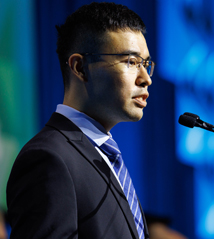
The session’s first presentation was given by Guang-Yi Sun, MD, of the Chinese Academy of Medical Sciences and Peking Union Medical College in Beijing. Dr. Sun presented Hypofractionated vs. Conventional Fractionated Postmastectomy Radiotherapy in High-Risk Breast Cancer: 10-Year Outcomes from a Phase 3 Randomized Trial. At 10 years, the three-week hypofractionated regimen maintained low rates of locoregional recurrence, with no significant differences from the five-week regimen in disease-free or overall survival. Dr. Sun said the long-term findings support 43.5 Gy in 15 fractions as a practical option for appropriately selected patients with high-risk breast cancer, potentially reducing treatment burden without compromising long-term disease control. Future studies will evaluate the approach in broader populations using contemporary radiation therapy techniques and systemic therapy, while also examining patient-reported and reconstruction-related outcomes, as well as implementation across diverse healthcare settings. These data also may help support wider use of hypofractionated PMRT.
Discussant Janice Lyons, MD, FASTRO, of University Hospitals Seidman Cancer Center in Cleveland, placed the results alongside other phase III trials supporting moderate hypofractionation when regional lymph nodes are treated. She said the growing long-term evidence supports shorter schedules for most patients receiving postmastectomy radiotherapy, while important questions remain for some higher-risk groups, including patients with substantial residual disease following neoadjuvant therapy. Dr. Lyons said a better understanding of intrinsic tumor radiosensitivity could eventually help individualize fractionation rather than applying the same schedule to every patient.
Discussant Michelle Specht, MD, of Mass General Brigham, discussed the findings from a surgical perspective, noting that evidence supporting hypofractionated PMRT now spans a range of contemporary treatment settings. She highlighted reassuring long-term local control among patients treated after different axillary approaches, as well as those receiving reconstruction or neoadjuvant chemotherapy. Together, she said, the accumulating data help broaden confidence in shorter PMRT schedules across the increasingly varied ways patients undergo breast cancer surgery and systemic therapy.

Next, Theodore Hong, MD, of Dana-Farber Cancer Institute in Boston, presented Initial Results of NRG Oncology NRG-GI003: A Phase III Randomized Trial of Protons vs. Photons for Hepatocellular Carcinoma (HCC). Dr. Hong said that while NRG-GI003 did not demonstrate a difference in overall survival between proton and photon therapy for HCC, the findings help shape the next phase of research. The data shift the focus toward identifying subgroups of patients who may be more likely to benefit from proton therapy. Future studies also should examine whether protons improve quality of life or reduce side effects compared with photon therapy; patient-reported fatigue outcomes collected in the trial will be analyzed separately. With survival in both treatment arms exceeding estimates, NRG Oncology is now evaluating radiation therapy in the context of immunotherapy-based systemic therapy through the ongoing NRG-GI012 HELIO-RT trial, and Dr. Hong encouraged enrollment on the study.
Discussant Erqi Pollom, MD, MS, of Stanford Cancer Institute in Palo Alto, California, said the trial underscores how much liver-directed radiation therapy has evolved since the study was designed. Although protons did not improve survival, they reduced radiation exposure to uninvolved liver and were associated with less severe laboratory toxicity, driven largely by lymphocyte sparing. Dr. Pollom suggested that future research could focus on whether protons can expand the use of liver radiation to patients with higher-risk features, such as larger tumors or impaired liver function.
Speaking from a medical physics perspective, discussant Marco Schwarz, PhD, of the University of Washington in Seattle, focused on how proton therapy planning and delivery have evolved since NRG-GI003 began. Protons achieved greater liver sparing, but the expected separation in tumor dose between the two modalities did not occur. Dr. Schwarz said contemporary approaches such as robust optimization could produce different dose distributions today. He also said the apparent advantage for photons among patients with larger tumors was unexpected and that further analyses of treatment volumes and tumor location may provide additional insight.
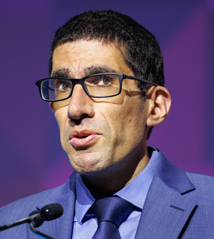
Ayal Aizer, MD, of Brigham and Women’s Hospital in Boston, then presented Alliance A071801 Phase III Trial Postoperative Single Fraction Stereotactic Radiosurgery (SRS) vs. Fractionated SRS (fSRS) for Resected Brain Metastasis. The phase III trial found that three to five fractions of radiation therapy improved control at the surgical site compared with a single treatment after resection of larger brain metastases, without significantly increasing side effects. A071801 provides level 1 evidence supporting the superiority of fractionated SRS for resected brain metastases 2 cm or larger and establishing fSRS as a standard of care in the postoperative setting. “We now have the strongest evidence to date that three to five sessions should be considered a standard postoperative treatment for patients with larger brain metastases,” Dr. Aizer said. Next steps include understanding the mechanisms underlying the benefits of fractionation and determining whether outcomes can be further improved by delivering SRS before rather than after surgery.
Discussant Rupesh Kotecha, MD, of Miami Cancer Institute in Miami, said the trial fills a major gap in the postoperative evidence base and supports fractionated SRS over single-fraction treatment following resection. Importantly, the improvement in surgical-bed control came without an apparent increase in side effects. Dr. Kotecha said the study helps complete the evidence supporting postoperative radiation therapy approaches, while important questions remain about how fractionated SRS compares with emerging preoperative strategies and postoperative brachytherapy.
Discussant Roshan Prabhu, MD, MS, of Atrium Health Levine Cancer in Charlotte, North Carolina, emphasized that several approaches are now available around resection of brain metastases, each with different advantages and logistical challenges. He said postoperative fractionated SRS clearly improves cavity control without increasing toxicity, but the observed overall survival difference requires further study before causation can be assigned. If postoperative external-beam radiation therapy is chosen, however, Dr. Prabhu said fractionated SRS should now be considered the standard approach.

Chad Rusthoven, MD, of the University of Colorado School of Medicine in Aurora, Colorado, next presented NRG-CC009: A Phase III Trial of Stereotactic Radiosurgery (SRS) vs. Hippocampal-Avoidant Whole Brain Radiotherapy (HA-WBRT) for Brain Metastases from Small Cell Lung Cancer (SCLC). NRG-CC009 was the first randomized phase III trial to compare SRS with HA-WBRT plus memantine for patients with brain metastases from SCLC. Although the trial did not demonstrate a difference in the primary endpoint of time to neurocognitive failure, researchers observed significantly improved overall survival with SRS, with median survival of 17.4 months compared with 8.6 months after HA-WBRT. Dr. Rusthoven noted that the finding is particularly important because it addresses a longstanding concern that omitting whole-brain radiotherapy in SCLC could lead to worse survival. Taken together with the established benefits of SRS in other settings, the findings support SRS as an option for patients with brain metastases from SCLC.
Discussant Henning Willers, MD, FASTRO, of Massachusetts General Hospital in Boston, said the findings establish an important role for SRS in SCLC, particularly when patients have a limited number of brain metastases. As intracranial disease burden increases, however, treatment decisions become less straightforward because treating visible lesions does not address microscopic disease throughout the brain. Emerging systemic treatments with central nervous system activity may further alter this balance. Dr. Willers emphasized individualized treatment that considers both the cognitive effects of whole-brain radiation therapy and the consequences of uncontrolled intracranial disease.
Discussant Debra Yeboa, MD, of MD Anderson Cancer Center in Houston, also emphasized careful patient selection. She noted that patients in NRG-CC009 generally had relatively low intracranial disease burden, with a median of two brain metastases, and said the overall survival difference should be interpreted cautiously rather than viewed as proof that SRS itself improves survival. At the same time, she said the trial supports an expanded role for SRS in selected patients with SCLC, while whole-brain radiotherapy will continue to have a role for others.

Lastly, Nicholas van As, MD, MB, of The Royal Marsden NHS Foundation Trust in London, presented Efficacy of Radical Prostatectomy Versus Stereotactic Body Radiotherapy (SBRT) for Localized Prostate Cancer: Results from an International Phase III Randomized Controlled Trial (PACE-A). PACE-A provided the first randomized long-term comparison of surgery and SBRT for localized prostate cancer. Both treatments achieved excellent cancer control at eight years, while a separate late-breaking analysis showed substantially better preservation of sexual function five years after SBRT. Together with PACE-B, which established five-fraction SBRT as an effective treatment for localized prostate cancer, these results provide patients with high-quality evidence to weigh cancer control and quality-of-life outcomes when choosing between two very different treatments. The PACE program is continuing to evaluate SBRT in higher-risk prostate cancer settings and further personalize treatment choices. “We now have longer-term information on both cancer control and the functional outcomes that matter greatly to patients,” Prof. van As said. “The urinary and sexual-function benefits seen at two years remained evident at five years, while cancer control remained excellent through longer follow-up. That gives patients a much fuller picture of what to expect from each treatment.”
Discussant Deborah Citrin, MD, FASTRO, of the National Cancer Institute in Bethesda, Maryland, said PACE-A fills an important evidence gap by directly comparing contemporary surgery with SBRT. She described the point estimate favoring SBRT as encouraging but emphasized that only 13 cancer events had occurred, leaving the magnitude of any treatment difference uncertain. Dr. Citrin placed PACE-A alongside PACE-B and NRG-GU005 as part of the growing randomized evidence for prostate SBRT, while noting that treatment selection should increasingly integrate disease biology, imaging and patient preferences. Prospective trials will help address the remaining gaps and further personalize treatment decisions.
Published on: September 29, 2026