The session was moderated by ASTRO’s Annual Meeting Scientific Committee Chair and Vice Chair, Kenneth Rosenzweig, MD, FASTRO, of the Icahn School of Medicine at Mount Sinai in New York, and Farzan Siddiqui, MD, PhD, FASTRO, of Henry Ford Hospital and Wayne State University in Detroit.
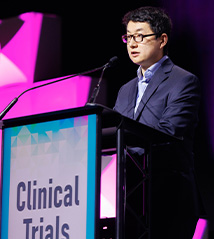
The session’s first presentation was from Shuang Zhao, MD, MSE, of MD Anderson Cancer Center in Houston, who presented Evaluation of PAM50 Molecular Subtypes in Post-Prostatectomy Salvage Radiotherapy: An NRG Oncology-RTOG 0534 Analysis. Dr. Zhao reported prospective-retrospective validation of PAM50 as a predictive biomarker for androgen deprivation therapy (ADT) benefit in the post-prostatectomy salvage radiotherapy setting. Patients with luminal B prostate cancers derived greater benefit from hormonal intensification with salvage radiotherapy, while the luminal-basal molecular axis emerged as a clinically relevant biomarker across localized, recurrent and metastatic disease. Together with results from NRG-GU006, the findings support further study of tumor biology to personalize treatment decisions rather than relying on a one-size-fits-all approach. The researchers plan to evaluate PAM50 across additional trials to further assess its clinical utility and potentially guide more precise, biomarker-driven care for men with prostate cancer. Dr. Zhao acknowledged that the study is part of the legacy of Felix Feng, MD, FASTRO.

Dr. Zhao was followed by Mark Buyyounouski, MD, MS, FASTRO, of Stanford University in Palo Alto, California, who presented Five-Year Results of a Phase 3 Trial of Hypofractionated vs. Conventional Postprostatectomy Radiotherapy: NRG Oncology GU003. At five years, hypofractionated postoperative radiotherapy (HYPORT) remained noninferior to conventionally fractionated radiotherapy (COPORT) for late patient-reported urinary and bowel outcomes, with similar disease control between the approaches. HYPORT shortened treatment from 37 fractions to 25, reducing treatment burden, but was associated with a modest increase in physician-reported Grade 3 urinary toxicity. Dr. Buyyounouski said the results underscore the complexity of choosing a postoperative fractionation schedule, particularly for patients who already face risks from surgery and radiation. Decisions require weighing the reduced treatment burden of a shorter course against the possibility of additional urinary toxicity, he said, with the relative importance of those factors likely to differ from patient to patient.

Discussant Sophia Kamran, MD, of Massachusetts General Hospital in Boston, said the GU003 results strengthen the case for moderate hypofractionation as a postoperative treatment option, particularly when reducing time in treatment could improve access or ease the burden of care for patients who have already undergone surgery. Shortening treatment from 37 fractions to 25 can substantially reduce time in treatment, she noted, while the similar five-year patient-reported outcomes support the acceptability of a shorter course. At the same time, the late grade 3 genitourinary toxicity findings should inform shared decision making, particularly for younger patients who may live for many years after treatment. Dr. Kamran said longer follow-up will be important to determine whether the cumulative GU burden changes beyond five years and whether the favorable early patient-reported outcomes persist.
Turning to PAM50, Dr. Kamran said RTOG 0534 strengthens evidence that tumor biology can help predict who benefits from hormonal therapy with salvage radiotherapy. She highlighted the potential value of using tumor biology to identify patients who might avoid hormonal therapy, while cautioning that she would not use PAM50 alone to omit otherwise-indicated treatment. An important remaining question, she said, is whether tumor biology can ultimately identify a group in whom hormonal therapy can be safely omitted with salvage radiotherapy.

Next, Leslie Ballas, MD, FASTRO, of Cedars-Sinai in Los Angeles, presented Phase II Multi-Institutional Study of Ultralow-Dose (4Gy) Response-Adapted Radiotherapy for Symptomatic Bone Metastases from Multiple Myeloma. As patients with multiple myeloma live longer and receive more lines of therapy, preserving bone marrow becomes increasingly important. Dr. Ballas said the findings support risk-adapted, low-dose radiation as a palliative option that can limit bone marrow exposure while reducing treatment burden. The regimen can be delivered in just one or two fractions, with minimal adverse events, and allows systemic therapy to continue with little interruption. She said hematologists might therefore consider palliative radiation earlier or more often without the same concern about bone marrow toxicity. Future work will focus on whether some patients could benefit from treatment earlier in the course of bone disease and on identifying which lesions are most likely to respond.

Following Dr. Ballas, Nadia Laack, MD, MS, of Mayo Clinic in Rochester, Minnesota, reported on Stereotactic Body Radiation Therapy (SBRT) and Comprehensive Metastasis-Directed Therapy for Ewing Sarcoma Patients Enrolled on AEWS1221: A Report from the Children’s Oncology Group (COG). The study found that SBRT to smaller bone metastases was feasible and safe in pediatric patients, with low rates of local relapse after treatment. Comprehensive treatment of metastatic sites also was associated with improved event-free and overall survival in univariate analyses compared with leaving some metastatic sites untreated. Dr. Laack said ongoing work is examining patterns of failure to better understand which metastatic lesions are most likely to recur and which patients may benefit most from comprehensive local therapy. Researchers also are evaluating clinical factors and biomarkers that could help guide more individualized treatment strategies.

Bobby Koneru, MD, FASTRO, of Loyola University and MercyOne Cancer Center in Dubuque, Iowa, spoke on a Randomized Trial of Low-Dose Radiotherapy for Knee Osteoarthritis: Patient-Reported, Structural and Long-Term Clinical Endpoints. In nearly 300 patients followed for almost 12 years, low-dose radiation therapy was associated with sustained improvements in symptoms and quality of life, while MRI showed less structural deterioration and long-term follow-up found lower rates of disability. The apparent benefits were greatest among patients with grade 2 osteoarthritis, who also had fewer knee replacements. Dr. Koneru said the consistency between the patient-reported improvements and objective findings in the integrated analysis raises the possibility that low-dose radiation may do more than relieve symptoms and could influence the longer course of osteoarthritis. He said the next step should be a multicenter, sham-controlled randomized trial with prospectively defined imaging and long-term clinical endpoints. If the results are confirmed, LDRT could offer patients a noninvasive treatment option with the potential to preserve joint function and delay disability or surgery.

Paul Brown, MD, of Mayo Clinic in Rochester, Minnesota, followed with SWOG S1827/MAVERICK: A Randomized Phase III Trial of Brain MRI Surveillance with and without Prophylactic Cranial Irradiation (PCI) for Small-Cell Lung Cancer (SCLC). In the trial, MRI surveillance alone resulted in superior cognitive failure-free survival compared with MRI surveillance plus PCI, with a similar magnitude of benefit in patients with limited- and extensive-stage SCLC. The cognitive benefit also was seen among patients who received hippocampal-avoidance PCI. Although PCI reduced brain metastases, there was no significant difference in progression-free survival, and preliminary analyses showed no significant difference in overall survival. Patients receiving MRI surveillance alone also experienced fewer adverse events and reported better outcomes. Dr. Brown said the findings support MRI surveillance alone as the standard of care for patients with SCLC, while longer follow-up will further clarify the survival results.
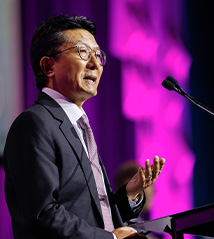
Joe Chang, MD, PhD, MS, FASTRO, of MD Anderson Cancer Center in Houston, concluded the trial presentations with Six-Year Overall Survival of Nivolumab Following Stereotactic Ablative Radiotherapy in Early-Stage Non-Small Cell Lung Cancer: Randomized I-SABR Trial. In this randomized phase II trial, I-SABR produced, to the investigators’ knowledge, the first statistically significant overall survival benefit from adding immune checkpoint blockade to SABR in patients with early-stage or isolated, node-negative recurrent NSCLC. The clinical benefit was accompanied by changes in plasma proteins and expansion of activated cytotoxic CD8+ T-cell clonotypes, providing biological support for combining PD-(L)1 blockade with SABR. Dr. Chang said that, given mixed findings from phase III trials, future studies should focus on biologically informed patient selection and treatment sequencing, with longitudinal immune monitoring helping to clarify who benefits over time. He also pointed to AI-based integration of clinical and biological information as a potential way to further personalize immunotherapy after SABR.

To close out the session, discussant Ben Slotman, MD, PhD, FASTRO, of Amsterdam UMC in Amsterdam, said the MAVERICK findings bring MRI surveillance without PCI close to being ready for routine use, although mature overall survival data are still awaited. He noted that omitting PCI comes with a higher risk of brain metastases and potentially greater use of stereotactic radiosurgery or whole-brain radiation therapy, making access to MRI surveillance, treatment burden and patient preference important considerations. A planned pooled analysis of MAVERICK and PRIMALung may help provide a more definitive answer, he said, while PCI remains an alternative for patients who cannot or prefer not to undergo regular MRI surveillance.
Turning to I-SABR, Dr. Slotman said subgroup analyses suggested benefit across patient groups and that adverse events from nivolumab were manageable, with evidence of prolonged immune activation. He cautioned, however, that the trial was small, conducted at only three centers and included a heterogeneous patient population. The findings support a potential role for immunotherapy in selected patients with early-stage NSCLC, he said, but important questions remain about which patients are most likely to benefit and which immunotherapy approach is optimal.
Published on: September 28, 2026