ASTRO congratulates the 2026 Mentorship Award recipients
ASTRO congratulates the recipients of the 2026 Mentorship Award: Beth Erickson, MD, FASTRO, The Medical College of Wisconsin; Clifton (Dave) Fuller, MD, PhD, FASTRO, The University of Texas MD Anderson Cancer Center; Meredith Giuliani, MBBS, MEd, PhD, University of Toronto and Princess Margaret Cancer Centre. The ASTRO Mentorship Award recognizes mentors in radiation oncology who demonstrate outstanding commitment to the professional development of their mentees as clinicians, educators and researchers. We look forward to celebrating them during the Awards Ceremony at the Annual Meeting.
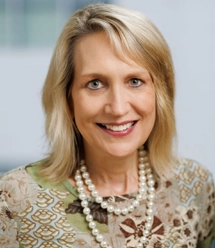
Beth Erickson, MD, FASTRO, is a Professor of Radiation Oncology and surgery at the Medical College of Wisconsin. Dr. Erickson has shared her infectious joy with students in every phase, from high school and college to medical students, residents, fellows and faculty at many phases in their careers. She models paying it forward, acknowledging the inspiring and generous mentorship that she herself received. Whether the mentor or mentee, she is exhilarated by the process of sharing an idea and watching a project evolve and reach completion or spurring on a new project. She has continually been amazed with the ingenuity and talents of those who have surrounded her and is grateful for the generous exchange of ideas that occur in a mentoring exchange. She believes that mentorship overflows to helping patients, stimulating much-needed innovation in the field and enriching careers along the way.
– Beth Erickson, MD, FASTRO
Dr. Erickson views being a mentor as a position of opportunity, making mentees feel welcome, especially at the start of a relationship, not wanting them to fear failure or disappointment. She acknowledges that not every mentee will go on to produce something pivotal, nor is that the point. Her generous spirit is evident: “Showing an interest in someone can be just the impetus they need to believe in themselves. Great things will follow. Sometimes you provide that pivotal spark that ignites a career and sometimes you simply help someone to realize that they matter.”
Dr. Erickson has multiplied the support toward others that she initially received from colleagues and family. Their support in tandem with a willingness to work hard, seize opportunities to gain and share expertise, and collaborate with others around patient care, research ideas and clinical program development have made for a meaningful and impactful career. She views her achievements as the culmination of the efforts of many generous and talented individuals.
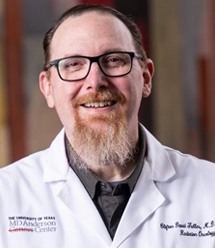
Clifton (Dave) Fuller, MD, PhD, FASTRO, professor at The University of Texas MD Anderson Cancer Center, cites his greatest career achievement as having worked with trainees. He proudly cites mentees including medical student mentee, Emma Holiday, MD, now a leader in education and GI oncology, and his first postdocs, Musaddiq Awan, MD, and Abdallah Mohamed, MD, PhD, who have gone on to be successful head and neck radiation oncologists. He considers it his good fortune to have walked alongside a host of talented and innovative individuals who make him excited to see where they will take the field in the decades ahead.
– Clifton (Dave) Fuller, MD, PhD, FASTRO
Dr. Fuller shares that his career has been shaped by mentorship since very early in medical school. He recognizes individuals who have made “indelible impacts on his career,” including Charles R. Thomas Jr., MD, FASTRO; David I. Rosenthal, MD; and the late David H. Hussey, MD, FASTRO. As one of the last radiology-trained radiation oncologists, Dr. Hussey was an instrumental part of Dr. Fuller’s love for imaging science and inspired him to acquire a PhD in Human Imaging. Still viewing himself as under the mentorship and tutelage of Drs. Thomas and Rosenthal, he thinks at some level everything he does as mentor and educator is an attempt to live out the support “CRT” and “DIR” have dedicated to him as examples for over a quarter century.
Dr. Hussey once shared, speaking of his own mentor, Howard Latourette, MD, “Nobody’s manuscripts show up to their funeral, but the people you helped will be the story of your life.” Dr. Fuller recalls times in his career where he felt that he was actively failing, on the precipice of quitting, losing hope in himself. In those moments, his mentors were more than just intellectual guides or exemplars of clinical acumen; they were a source of belief and sustaining values. Recalling this, Dr. Fuller encourages others to “realize that their mentorship investment will bear fruit for our patients and ensures the best future for the next generation of radiation oncologists.”
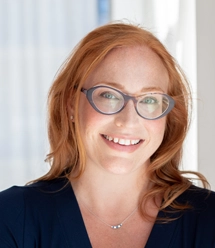
Meredith Giuliani, MBBS, MEd, PhD, is an Associate Professor at the University of Toronto, Department of Radiation Oncology, and a radiation oncologist at the Princess Margaret Cancer Centre. Whether working with learners, colleagues or patients and caregivers, Dr. Giuliani has always believed that meaningful change begins by listening, learning from others and helping them realize their potential.
Throughout her career, Dr. Giuliani has had the privilege of mentoring medical students, residents, fellows, junior faculty and colleagues at every stage of their professional development. Watching individuals grow in confidence, discover their own strengths and become compassionate clinicians, educators, researchers and leaders has been most rewarding. Just as importantly, she reveals that she has learned as much, if not more, from her mentees, as their perspectives, experiences and ideas have continually challenged her to rethink how to teach, lead and deliver care.
With growing leadership responsibilities, Dr. Giuliani has become increasingly focused on creating sustainable systems that enable others to succeed. In addition to mentoring individuals, she has sought to improve the structures that support them. This includes developing educational programs, leadership opportunities and more inclusive pathways for career development. She shares: “Mentorship has shaped not only my career, but also the way I approach leadership, education, and patient care. I have been fortunate to learn from mentors who challenged me to think beyond my immediate role, encouraged me to pursue opportunities that felt beyond my reach, and demonstrated that leadership is ultimately about creating opportunities for others to succeed.”
– Meredith Giuliani, MBBS, MEd, PhD
Equally important, she notes, is the reciprocal relationship: “Every interaction has reinforced that mentorship is not a one-way exchange of knowledge, but a collaborative relationship built on curiosity, trust and mutual growth.” She details that the questions learners ask, the perspectives colleagues bring and the experiences patients share have continually challenged her. These experiences have shaped her philosophy that mentorship extends beyond supporting individual career development, to creating environments where people can thrive. “The most enduring impact is not measured by achievements, but by the people they support and the systems left stronger for others.”
Dr. Giuliani encourages others to think broadly about the opportunities to mentor: “It does not require a formal title or an established program. It begins with curiosity about another person’s goals, a willingness to listen and a commitment to helping others grow while remaining open to learning from them in return.” She has witnessed a ripple effect that extends far beyond any one relationship. Each person encouraged, every opportunity created and system improved can impact countless future learners, colleagues and patients.
Join us as we celebrate the 2026 Mentorship Award winners on Tuesday, September 29, during the ASTRO Awards Ceremony.