ASTRO congratulates the 2026 ASTRO Gold Medalists
Jennifer Jang, MHS, ASTRO CommunicationsASTRO holds in high esteem the four exceptional leaders selected to receive the 2026 ASTRO Gold Medal Award, the Society’s highest honor:
- Theodore DeWeese, MD, FASTRO, CEO, Johns Hopkins Medicine, Dean of the Medical Faculty, Johns Hopkins University School of Medicine
- Daniel Low, PhD, FASTRO, Professor and Vice Chair of Medical Physics Research and Innovation, Radiation Oncology, Professor of Radiological Sciences, UCLA
- Alvaro Martinez, MD, FASTRO, Senior Vice President of Scientific and Clinical Strategy, MHP Radiation Oncology Institute
- Bruce Minsky, MD, FASTRO, Professor Emeritus of Radiation Oncology, University of Texas MD Anderson Cancer Center
Read more to travel the path of each recipient's journey to this remarkable designation.
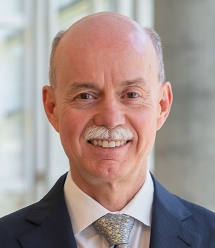
Theodore DeWeese, MD, FASTRO
CEO, Johns Hopkins Medicine, Dean of the Medical Faculty, Johns Hopkins University School of Medicine
– Theodore DeWeese, MD, FASTRO
Dr. DeWeese’s path to radiation oncology began during his third year of medical school at the University of Colorado. While on the surgery service, he saw a patient with what he now recognizes was a bleeding lung cancer obstruction. The patient was referred for radiation treatment, and within days, there was a remarkable change. The bleeding stopped, the patient was breathing more comfortably, and his overall condition improved dramatically.
As a medical student, witnessing that kind of rapid transformation had a powerful impact. It sparked Dr. DeWeese’s curiosity to learn more and became a defining moment that shaped his future in the field, including roles as President of ASTRO, and culminating to a position of tremendous influence as CEO of Johns Hopkins Medicine.
Looking back several decades later, Dr. DeWeese says the most meaningful part of his career has been the opportunity to make a difference in the lives of patients and their families — whether by helping to cure disease or by providing hope and comfort during some of life’s most vulnerable and challenging moments.
He counts among his proudest accomplishments the chance to train and work alongside so many medical students, graduate students, residents and fellows over the years, many of whom have gone on to make important contributions of their own.
Research has also been a deeply gratifying part of his career. Dr. DeWeese takes great pride in having contributed to advances that have helped shape how others think about cancer treatment and, ultimately, improved patient care.
Underlying all of these accomplishments is a deep sense of responsibility to others and a commitment to doing his very best in every role he serves.
That sense of purpose was shaped early in life. Dr. DeWeese’s father died when he was just 3 years old, leaving his mother to raise him and his two sisters. His family relied on public housing in Colorado and was fortunate to live in a neighborhood where many families faced similar challenges and looked out for one another.
“It’s not an exaggeration to say that their kindness made a real difference for our family,” he says.
Those experiences gave him an early appreciation for how hard many people work simply to get by and for the profound impact that even small acts of compassion can have.
“I think it’s important to remember that even when we can’t cure someone, we still have a great deal to offer,” says Dr. DeWeese. “Sometimes the smallest acts — being present, offering a word of support, or holding someone’s hand in a difficult moment — can provide comfort and help ease pain and suffering.”
Whether caring for patients, mentoring trainees or helping lead an organization, Dr. DeWeese remains motivated by the opportunity to genuinely improve people’s lives. “There’s tremendous fulfillment in being part of something that has a lasting, positive impact on people,” he says.
As he reflects on the future of radiation oncology, his optimism is unmistakable.
“The future is extremely bright because the opportunities within the field continue to expand. Radiation therapy is increasingly being integrated with other therapeutic modalities, from immunotherapy to novel targeted radiation therapy approaches and new radiopharmaceutical options. These advances are creating entirely new possibilities for how we treat cancer and improve outcomes for patients.”
Dr. DeWeese also points to emerging opportunities to impact nonmalignant diseases in ways that historically were not possible. He believes the potential to broaden the reach of these treatments, all to the betterment of human health, is incredibly promising.
Looking to the next generation, Dr. DeWeese shares this advice: “If you deeply respect this profession, you quickly learn that you need to be a great physician first — then a great oncologist, followed by a great radiation oncologist. That order matters. Everything else is built on the foundation of being a great physician.”
Throughout his career, Dr. DeWeese has embodied a spirit of optimism and a deep belief in the future of medicine, science and the field. He hopes to inspire patients, colleagues and future radiation oncologists to share that same sense of possibility. More than anything, he hopes his work has helped move the field forward in ways that improve human health and the human experience and has encouraged others to continue building on that progress.
Receiving the Gold Medal, he says, is almost beyond belief.
“I feel deeply humbled and honored to be considered worthy of this award — especially when I think about the individuals receiving it alongside me, and those who have received it in past years,” he says. “It’s a true privilege to be included in that group.”
It is a sentiment echoed throughout the stories of this year’s Gold Medalists.
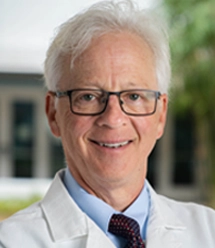
Daniel Low, PhD, FASTRO
Professor and Vice Chair of Medical Physics Research and Innovation, Professor of Radiological Sciences, UCLA
– Daniel Low, PhD, FASTRO
Dr. Low obtained his PhD in Nuclear Physics at Indiana University. In spite of this degree, he was not interested in staying in that field after graduation and struggled with what career suited his interests. During this period of searching, while on a flight, Dr. Low asked his seatmate why he was going to Indianapolis and learned that he was installing a new radiation therapy system in a hospital. Upon further inquiry, Dr. Low discovered that his seatmate was a medical physicist and his interest was piqued. Soon after, Dr. Low went to his advisor and spoke to him about the subject. With no medical school nearby, his advisor connected Dr. Low with a student who had graduated years earlier and had gone into medical physics, and thus, he received his introduction to radiation oncology. Soon after, it became clear that this career was an outstanding opportunity for not only his training but also his interest in working in academia on more practical problems that pure physics tackled.
Many years later, Dr. Low now considers tenure both at Washington University in St. Louis, and now at the University of California, Los Angeles, as one of his greatest career achievements, ensuring career security and stability that was personally important. A second was developing a series of conceptual frameworks and paradigm changes that ultimately led to the development of 5DCT. Finally, authoring the “Gamma paper,” the highest cited paper in the history of the journal Medical Physics, stands out.
Dr. Low continues to be driven by his work to generate sufficient evidence, exposure, interest and understanding of the perils and limitations of 4DCT and the potential for model-based CT, or, 5DCT. Because of the limitations of 4DCT, a number of treatment planning quality improvements, adaptive opportunities and patient positioning protocols have not been available.
When considering the future of RO, Dr. Low has been impressed by the nearly continuous and significant technical developments in this field since before he entered it in 1988 as a postdoctoral fellow. Before every significant transition, Dr. Low and his colleagues thought that RO had stabilized and that technological improvement would be limited, and yet, in every case found themselves to be wrong. Now he views the field as one that innovates and moves forward with enthusiasm and momentum. He acknowledges that he is still bullish on MR-Guided RT and is excited about the further personalization of RO as ART is more broadly adopted. The potential of AI for modeling and predicting and the possibility that FLASH could be the next generation RO modality is also exciting. More recently, the ability of some LLMs to aid in software development will broaden the reach of physicists to make an impact via software tools and through improved research bandwidth and productivity.
Dr. Low’s guidance to younger physicists is: “Be a team player, understand that you are working with a highly heterogeneous team in terms of backgrounds and education, but that each and every one of them is a professional and deserves your respect. Also, be of service; make it clear to others that you are there for them and volunteer your expertise.” He notes that physicists have a unique niche, that their expertise and talents are useful in more than their direct jobs, so offering that to others goes a long way toward building an effective and satisfied team.
Dr. Low eyes his best chance for leaving a legacy is to get model-based CT into clinics. He believes that once it is there, then both physicists and companies will push forward, improving its accuracy and developing the potential workflow improvements that he does not have the bandwidth to do, and that this will improve RO for many patients with lung and upper abdominal cancer.
When Dr. Low started as a junior medical physicist, his boss and mentor James Purdy, PhD, FASTRO, who led the RO Medical Physics team at Washington University (when the department was called the Mallinckrodt Institute of Radiology), had built and was committed to their being a true academic program. This meant that those on the tenure track were responsible for excellence in their clinical, education, research and service careers. Regarding service, he was very active in both AAPM and ASTRO, and Dr. Low was able to see through his participation what ASTRO meant to medical physicists. He was impressed to find that ASTRO allows medical physicists to be full members, so he joined as a full member from the outset. Dr. Low’s initial experience with ASTRO was through Advocacy Day, which he found engaging and fascinating and where he was impressed by the commitment of ASTRO to support the scope of RO, from small private practice clinics to large academic programs, and to not only RO providers but also its patients. From his start volunteering, he has continued to support ASTRO and hopes to do so for many years to come. And today, Dr. Low joins his mentor Dr. Purdy as a Gold Medal winner too.
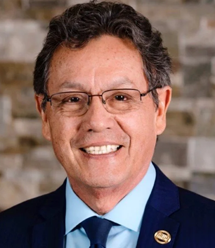
Alvaro Martinez, MD, FASTRO
Senior Vice President of Scientific and Clinical Strategy, MHP Radiation Oncology Institute
– Alvaro Martinez, MD, FASTRO
Originally from Bogota, Colombia, Dr. Martinez attended medical school and residency in general surgery in his homeland. A fellowship in surgical oncology brought him to New York, to Memorial Sloan Kettering. Over a few months, he noted that the radiation oncologists would be called in when a cancer tumor could not be resected. They’d insert a radioactive implant, and not having heard of radiation oncology prior to coming to the U.S., his interest was piqued. Needless to say, Dr. Martinez did not complete the original surgical fellowship and subsequently trained for four years at MSK in radiation oncology.
The first resident ever to request a rotation for a radiation biology laboratory, Dr. Martinez had an innate need to understand tumor biology as it related to radiation oncology. At first, fellow staff looked at him like he was crazy, but his enthusiasm was noticeable, and after that, those who had the power to do so offered him opportunities directly. He focused on the interaction between tumors and radiation. He became chief resident, followed by an assistant professorship at Stanford. In the midst of such career highlights, Dr. Martinez considers teaching and mentoring residents and fellows globally as his greatest. He appreciates having enabled them to benefit from new ideas and innovations — sending his mentees into the practices of the world globally. He appreciates the multiplicative impact of his guidance, as each physician further represents manifold patients he’s touched.
Reflecting upon his childhood, Dr. Martinez observes that who he is today originates especially from his physician father. Around the age of 7, he accompanied his father to visit patients who might be classified as charity cases. The consistent care his dad gave patients regardless of their economic status deeply impressed Dr. Martinez and shaped how he viewed his patients as well. Combined with the influence of his family, his Colombian and Montessori education really formed who he is, as it encouraged critical judgment and prepared him for innovation, especially in his strong suits of radiation biology and medical physics.
When pressed for what drives him today, Dr. Martinez said, “What continues to drive me is the desire to give patients access to innovation, and that is done through clinical trials. Clinical trials provide access to something more, or something less — from the current standard of care.” He expressed the need for residents and patients to understand what research is — that it is not experimenting on human beings — rather, trials are granting access to a treatment or method for which access is otherwise unavailable. He views “access to innovation through clinical trials and the constant pursuit of truth” as motivators. “After all, science is the pursuit of truth. The combination of pursuing truth with access to innovation can elevate medicine.”
Dr. Martinez envisions a great future. With all the innovations that have happened in the past few decades, such as image guided radiation therapy (patented by him), he looks at today’s imaging — his concept in 1990 has progressed tremendously to what it is today. He has contributed to ongoing advances, for example, by 2000 the first machine was developed with the cone beam, pioneering both image guided radiation therapy (IGRT), and then intensity modulated radiation therapy (IMRT) for pinpoint accuracy. Dr. Martinez published the first paper on the adaptive process, that is, the adaptation of treatment, where if a tumor is this big, information is collected to assess its response to treatment, which contributes to more replanning and more appropriate treatment. He reiterates the importance of reviewing tumor response: correct, measure, verify that the correction was appropriate. Combining these skills holds great promise for the future. For example, today when a tumor is imaged, we deliver hypofractionation. In the past, patients with prostate cancer required 45 visits, today that’s improved to say, 20 visits or even five for special cases. Meanwhile, the human body is constantly changing and adapting to that constant change is necessary to deliver proper treatment. Blood pressure, blood sugar, etc. change. “We must be able to assess the change, correct for change, and improve what we do.”
In this spirit, Dr. Martinez acknowledges that the incorporation of AI is exciting but has to be done in a controlled manner, with proper design and a properly designed platform. It is a tool that can enhance other tools used in the diagnostic or therapeutic environments, but must be controlled. “We can’t just run with it because it’s there. It must be properly designed.” Meanwhile, Dr. Martinez warns of the critical need to respect one’s patients in the midst of technological advances. He has seen one too many times when a colleague gives too much attention to the computer screen with the patients seated right there. The most important signs patients give are immediate and important to take in first. He urges physicians to listen carefully, to take in a patient’s signals. He has observed the tendency to patronize the elderly, and while they might take more time to process, he encourages colleagues to sit down at eye level, listen, pay attention.
Dr. Martinez had a few messages to share: encouraging colleagues young and old to be yourself, don’t try to be someone else, apply yourself because we have a very meaningful place in the setting of patient care to spend our energy, and to not be afraid to question what is the standard of care. “If we don’t question standard of care, then it’ll stay the same for decades, and that’s the way we’ll advance the field. If you develop intellectual curiosity and critical judgment, then your mind will move into looking at the scientific truth.” Not surprisingly, Dr. Martinez’s kids have at times observed, “Dad, you work too hard.” To which he replies: “I have never worked a day in my life, I love what I do.”
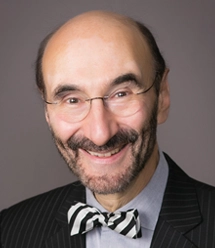
Bruce Minsky, MD, FASTRO
Professor Emeritus of Radiation Oncology, University of Texas MD Anderson Cancer Center
– Bruce Minsky, MD, FASTRO
Bruce Minsky, MD, FASTRO, received his MD from the University of Massachusetts. But it was a few years prior, during his junior year of college, that an ACS summer fellowship at the Harvard Joint Center for Radiation Therapy set him forward on the radiation oncology path, working on a lab project. The blend of biology, physics and clinical care impressed him to the point that he knew radiation oncology was his calling.
Furthermore, after med school, his residency at the Joint Center cemented his interest in GI malignancies, and he made early important contributions including analyzing failure patterns in colon cancer and the influence of biological factors such as vascular invasion. After residency, Dr. Minsky left Boston to lead the GI radiation oncology program at Memorial Sloan Kettering Cancer Center (MSKCC) where, along with colleagues from surgical and medical oncology, he produced influential papers that helped set the standards for treatment of locally advanced rectal cancer. Over the years, he achieved national and international stature in the treatment of patients with GI cancer while contributing extensively on multidisciplinary disease-site teams at MSKCC, University of Chicago, and since 2012, at the University of Texas MD Anderson Cancer Center, all institutions where he has served as Professor and in other leadership roles. He oversaw key efforts to define the optimal adjuvant and neoadjuvant therapy of rectal cancer and influenced the sequencing of radiation therapy with surgery and chemotherapy in the management of rectal cancer along with use of novel agents, the role of organ preservation, the influence of dose escalation in esophageal cancer and more.
Looking back, Dr. Minsky considers his career highlights. Driven by the concept of “Tikkun Olam,” loosely meaning, repairing the world and leaving it better than we found it, Dr. Minsky is proud of having helped change the standard treatment of rectal cancer from postoperative to preoperative combined modality therapy and limit the standard dose for esophageal cancer treatment (he acknowledges opinions are still mixed on this) to 50.4 Gy. Regarding roles, he has advocated for radiation oncologists to “leave the basement” and be present in tumor boards, on the hospital floors and administrative positions.
As a former president of ASTRO, Dr. Minsky’s most significant accomplishments for the Society have included enhancing radiation oncology’s reputation and visibility beyond ASTRO. He fostered closer relationships and joint initiatives with related associations, increased the visibility and presence of radiation oncology among other oncology societies and government entities including the FDA, NCI and NRC, and improved ASTRO’s international footprint via the Best of ASTRO program.
A common thread among the Gold Medal awardees is an instinctive yet deliberate prioritizing of mentoring. Dr. Minsky is no exception, and has supported many junior radiation oncologists over decades, many who have gone on to become leaders in radiation oncology. From personal experience and observations, he has cleared the path for junior oncologists to have opportunities to shine. As such, he proudly shares that he follows the dictum “do no harm,” and asks senior colleagues to step aside and allow the next generation to become the new leaders. He sums this mindset up: “We do not own the chair — we just occupy it.”
Dr. Minsky shared an anecdote of his medical school advisor asking him why he would join a specialty that depends on one modality which will likely become obsolete. After reminding him that surgery was more than a scalpel, he smiled and was pleased to write his recommendation letter. As such, he said, “Radiation has always had and continues to have a bright future. It just needs to continuously evolve with the other oncology disciplines. For example, as systemic therapy improves, so must the role of radiation in treating metastatic disease increase.”
When asked about legacy, Dr. Minsky was quite straightforward. He summarized, “For patients, please ask questions; for colleagues, let’s collaborate; and for the next generation of radiation oncologists — listen to your patients and do no harm.” Dr. Minsky views the Gold Medal as “the ultimate way to thank my mentors for their dedication and belief in me.”
Please join in the celebration to honor this year’s awardees at the Awards Ceremony Tuesday morning, September 29, and at the ASTRO Gold Medal Gala: A Legacy of Excellence, Tuesday evening (ticketed event), with proceeds benefiting Speed of Light – The ASTRO Foundation.