By Jennifer Jang, MHS, and Diane Kean, ASTRO Communications
ASTRO President Neha Vapiwala, MD, FASTRO, opened this year’s four-part Presidential Symposium, a deep dive into the Annual Meeting theme: Data to Dialogue: Communicating Radiotherapy’s Value to Advance Care. Speakers collectively tackled the challenges of communicating the unique aspects of the treatment we offer our patients; leveraging the various means of information dissemination in the modern era; appreciating the perspectives of patients and caregivers and how better to communicate the value of radiation therapy; and understanding how various stakeholders view our specialty.

Session I: Organ-Preservation: The Undersung Value of RT
ASTRO CEO Vivek S. Kavadi, MD, MBA, FASTRO, set the stage for the first session to examine the critical role of radiation therapy in organ-sparing treatment paradigms, looking at several disease sites, and how this role can best be communicated to patients. He noted current roles of radiation oncology in cancer care, including as a sole curative modality, a part of combined modality treatment, for oligometastatic disease, employed in combination with surgery, and for palliative use. The panelists then answered, “where does organ preservation fit in these different scenarios?”
To start, Lori Pierce, MD, FASTRO, professor of radiation oncology at the University of Michigan, specializing in breast cancer, spoke on the extensive evidence-based improvements in care when using radiotherapy in early-stage breast cancer treatment. Dr. Pierce cited multiple randomized trials of mastectomy vs. breast conservation surgery (BCS) and radiation therapy that indicated no mortality difference. Dr. Pierce emphasized a quote, shared at the 1990 NIH Consensus Development Conference concluding that “breast-conservation treatment is an appropriate method of primary therapy for the majority of women with stage I and II breast cancer and is preferable because it provides survival equivalent to total mastectomy and axillary dissection while preserving the breast.” Almost 40 years later, “…this still serves as a reminder of the important impact radiotherapy serves for women with breast cancer,” said Dr. Pierce.
Significantly better outcomes were measured for body image, future perspective and systemic therapy side effects with BCS. Dr. Pierce summarized many trials showing the significant improvements in quality of life in patients with breast cancer when treated with radiotherapy, briefly highlighting FAST-FORWARD, EUROPA, and many others.
Dr. Pierce emphasized that, despite decades of evidence supporting BCS followed by radiotherapy for many patients with early-stage breast cancer, use of mastectomy has increased in some settings. She noted that fear of recurrence, highly visible preventive surgery decisions (citing Angelina Jolie’s public journey) and online conversations (social media) can shape patient perceptions, sometimes reinforcing the idea that more extensive surgery is the safer choice even when it is not medically necessary.
She concluded that clinicians must communicate the evidence more clearly and consistently: for many patients, breast-conserving therapy is not a lesser option, and more extensive surgery does not necessarily mean better cancer control.
Tom DeLaney, MD, FASTRO, professor of radiation oncology at Harvard Medical School, Associate Medical Director of the Burr Proton Radiotherapy Center and Co-Director of the Sarcoma Center at Massachusetts General Hospital, spoke on soft tissue sarcomas (STS) and limb preservation.
For STS, the lower extremity is the most common site, and in the 1970s, over 50% were treated by amputation. Currently, 95% are treated with limb preservation. Dr. DeLaney emphasized, however, that limb preservation must be measured not only by whether the limb is saved, but by whether meaningful function is preserved. “A non-functional limb is a functional hindrance,” he said, underscoring the importance of multidisciplinary planning, appropriate use of radiation therapy and rehabilitation to optimize quality of life.
Citing well known studies, including those from Princess Margaret Cancer Centre and NCI, as well as several large database studies, Dr. DeLaney summarized that when wide local excision surgery is used for treatment, local recurrence occurs in <10% of those who had surgery and XRT, the preferred treatment for most patients.
In the 1980s, two randomized trials at NCI showed that limb preservation plus radiation therapy served better than amputation or limb preservation surgery alone. Currently, many patients with STS are treated with surgery and radiation therapy. Preoperative radiation therapy is preferred for most deep STS involving or abutting critical structures, while surgery alone may be appropriate for select patients with T1 disease or superficial, low-grade, widely resected tumors. He cited recent 2025 data from Princess Margaret showing improved five-year limb salvage with surgery and radiation therapy compared with surgery alone, reinforcing the importance of tailoring treatment to maximize both disease control and long-term function.
Dr. DeLaney closed by emphasizing that treatment decisions should be made on a case-by-case basis, with attention to anticipated surgical margins, tumor characteristics and functional goals.
Steven Frank, MD, FASTRO, professor of radiation oncology at MD Anderson Cancer Center, presented his perspective on organ preservation for head and neck and prostate cancer. He began by defining the importance of the gateways to quality of life for different areas, such as the larynx (speech) and for the oral cavity (taste, eating and swallowing). For larynx preservation, he looked at varying combinations of treatment, to yield a new paradigm that has emerged, where IMPT improves overall survival by 10% at five years and has a 42% reduction in hazard of death. For orbit (cornea) sparing, a multidisciplinary orbit-sparing treatment approach includes proton therapy for epithelial tumors of the orbit and ocular adnexa.
The question pervading prostate cancer has been: To radiate or resect? “We’re crossing the threshold where radiation is becoming the gold standard in treatment for prostate cancer. We have technology that allows us to be precise…and to achieve curative doses, minimizing dose to [other organs] with high accuracy.”
Dr. Frank emphasized that as a field “we need to be able to communicate the study’s findings to our patients about quality of life after surgery.” For cure, the goal is overall survival, prostate cancer specific survival, and metastasis-free survival and hormone therapy-free survival.
Dr. Frank concluded with a charge: “Advocate and radiate! Prostate cancer is a great opportunity for us to communicate the value of radiotherapy.”
Najjia Mahmoud, MD, professor of surgery and chief of the division of colon and rectal surgery at the Hospital of the University of Pennsylvania, shared insights on organ preservation in rectal cancer. Dr. Mahmoud started by observing the traditional goal has been to cure the cancer by removing the organ, but the price is high to patient quality of life.
She emphasized that while local control and survival are necessary, they are not the only outcomes that matter. She noted that “organ preservation is not one thing,” and could involve a range of approaches including watch-and-wait, local excision and de-escalation, with the common denominator of all being avoidance of TME without compromising oncologic outcomes. “The question is no longer whether ‘watch and wait’ can work — it is how to select patients, optimize response and safely monitor.”
From the 1990s to now, the focus has been from making surgery better to making surgery unnecessary, and the question is now how to select patients, optimize response and safely watch, with organ preservation as an intentional endpoint, with XRT acting as an adjunct to avoid surgery altogether.
Organ preservation is not about preserving anatomy. Rather, it is about preserving function. Dr. Mahmoud shared how studies have indicated that it is worth building into the treatment algorithm. Radiation first results in lower “regrowth” and higher rates of rectal preservation.
After briefing the audience on many studies, Dr. Mahmoud posed the question on whether short-course radiation therapy is under-sung or under-used? She determined that short-course radiation therapy is an established oncologic strategy, but its role as an organ-preservation platform remains an evolving question. Finally, organ preservation is not a risk-free priority, as it trades the morbidity of surgery for the burden and uncertainty of surveillance.
“We need to make surveillance easier for our treatment. Coordinating messaging pre-treatment is imperative.”
Concluding, Dr. Mahmoud stated, “The next generation of trials should make organ preservation an explicit endpoint, not just an unexpected bonus.”
Dr. Kavadi closed the session with a discussion on communicating these findings with patients. The panelists stressed that radiation oncologists need to enter the conversation earlier, before patient fears or assumptions narrow the perceived treatment options. Organ preservation should be judged by function and quality of life, with tumor boards and direct clinician-to-clinician communication helping patients understand the full range of treatment options.
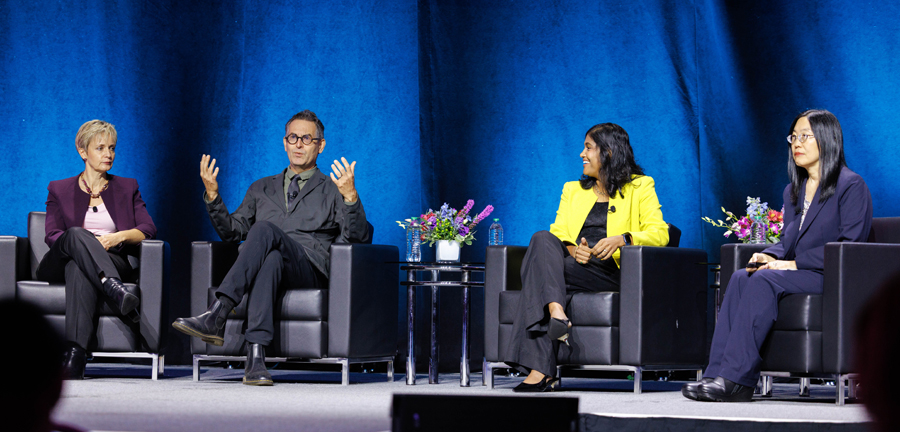
Session II - Challenges and Opportunities in Scientific Knowledge Creation and Dissemination
Sue Yom, MD, PhD, MAS, FASTRO, University of California San Francisco, introduced speakers, Mandy Hill, Cambridge University Press and Assessment, John Halamka, MD, MS, Mayo Clinic, and Samyukta Mullangi, MD, MBA, of Open Evidence, Inc. Through dialogue, they explored how patients and providers are ingesting information now.
Dr. Yom polled the audience, determining that primary medical information was coming from national guidelines first, followed by PubMed, AI chatbots, and journal websites. Having established current practices, Dr. Yom posed questions around trust in data, and the growing “avalanche of content.” Specifically, she posed the notion of “branding of trust” — that is, how can the publishing field demonstrate what is controlled and reliable, both for public consumption and to dispel misinformation.
The conversation turned to the high-risk reality of an analytic layer being lost, and consequently, editorials may offer the analysis that readers are looking for. Ms. Hill summarized that “There is an added value that can come from editorials and opinion pieces, that can help people navigate through the avalanche of content.”
The changing landscape raises other issues such as how to protect individual thought, how to measure impact and honor author contributions to the scientific and medical communities, and how to reconfigure reward and incentive models to define and support value.
Dr. Halamka pointed out that the large language model (LLM) is the function of the person using it, and that “the LLM is trying to make [you] happy.” This creates questions about who creates the frameworks for data aggregation and related questions of legality. “We can’t all be perfect users of these tools, but we will need AI on top of the AI to navigate the underlying knowledge sources.” Ms. Hill noted that it comes back to the transparency of tools, and users themselves will need training on how to interrogate the tools.
Dr. Yom then raised the question: what’s the role of journals in all this? Ms. Hill firmly responded, to provide “the gold standard for the peer-reviewed content, and that’s why the attribution part of these tools really matters.” She suggested that trust is a byproduct of journal attribution.
In closing, Dr. Halamka emphasized that we can no longer rely on the data we were given 40 or 50 years ago, that the future is more of a real-time experience. As such, he advised, “Be agile, be willing to change and be willing to distrust what you’ve been taught in the past.” Ms. Hill followed with: “Be an active agent for change so we end up with a system that we need.” And Dr. Mullangi observed, “You’re not writing just to your peers but to an audience of AI agents. Clarity and simplicity are more important. Having an opinion and editorial articles will carry a lot more weight when everything feels more flat.”
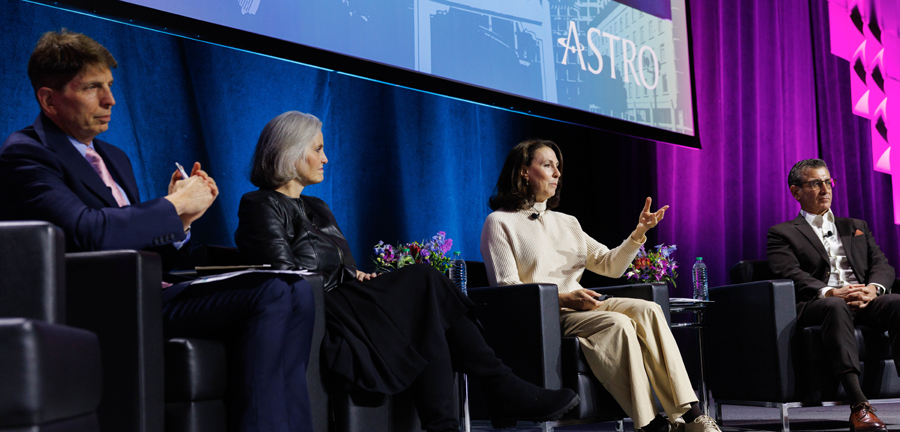
Session III - Patients’ Perceptions of Radiation Therapy
Drew Moghanaki, MD, MPH, FASTRO, David Geffen School of Medicine at UCLA, welcomed speakers Benjamin Corn, MD, FASTRO, Hebrew University Faculty of Medicine, Shelley Fuld Nasso, MPP, Cancer Nation, and Andrea Ferris, MBA, LUNGevity Foundation. Dr. Moghanaki opened the session emphasizing how patients receive radiation therapy both in their hearts and their minds, and that the intent of this session was to “Stop, think and reflect on patients, their perceptions of RT, and address their ‘radiophobia.’”
The panel emphasized some important factors to consider for the field: medical students in their first and second years do not receive didactic training on radiation therapy, which leads to them not being well-versed in the most rudimentary aspects of what we do. Other superficial factors add to the stigma, such as the word “radiation” whereas “radiotherapy” is more palatable. Even the colors often used to represent radiation therapy in graphics are yellow and black, which can imply a fearsome entity.
The panelists shared that to close the gaps of misunderstanding, side effects need to be a more substantive part of the conversation, along with the options of rehabilitation available to them.
Ms. Ferris shared that in the past decade alone, 75 more treatment modalities have become available for lung cancer, and that similar paths are also evolving for other cancers. This means that the field needs to anticipate what’s next for patients, their goals, what they want to get out of radiation therapy.
“Science changes medicine, implementation changes lives.” Ms. Ferris gave this reminder that minimum dosing is important to patients, and encouraged a focus on communicating this well, along with the personalization of care. In addition, patients want to know what to expect and how to manage their side effects. As one patient testified, “They told me the truth but not the whole truth.”
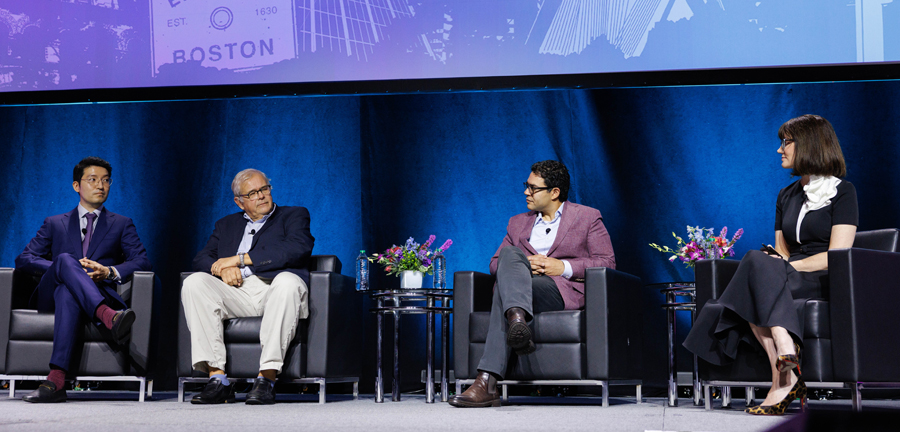
Session IV: Stakeholder Perspectives
Back-to-back, Casey Chollet-Lipscomb, MD, FASTRO, Tennessee Oncology and Curtiland Deville, MD, FASTRO, Johns Hopkins University, led panels on various stakeholder perspectives. The first panel included Thomas Hwang, MD, Harvard Medical School and PORTAL, Michael Kolodziej, MD, Canopy, and Fahad Tahir, MAS, MBA, Ascension Saint Thomas.
Dr. Chollet-Lipscomb opened the conversation by presenting what value might mean, for example, in clinical vs. economic vs. system contexts. Some key points emerged, including radiation therapy as a critical service from a comprehensive perspective of cancer care, not as a single service alone. From the health systems context, a key responsibility and moral imperative is to provide access and handle radiation therapy as a clinically essential component.
The panelists gave the reminder that in the industry, payors don’t think about radiation therapy at all simply for lack of understanding it, which is why radiation benefits managers exist. Of all diseases, cancer has become the most expensive per case, and fear is the dominant sentiment. Despite patient outcomes, radiation therapy is not seen as a value-add, hugely because the inputs are fundamentally different and thus valued differently.
The panel encouraged “learning how to be in the same room [as health care system representatives] differently to paint the picture to provide regional comprehensive care,” and Dr. Chollet-Lipscomb specifically suggested more involvement in the rule-making process. Key player agencies need the clinical expertise that this audience has. Unfortunately, physicians are least likely to comment even though they’re hugely impacted. Dr. Hwang encouraged more commenting on public rules and also to support ASTRO to be your advocates.
There is an incredible story to tell across all practice environments and disease sites and more advocacy is needed for our field, practitioners and patients. That advocacy only comes with more engagement. As a field, we need to move together to prioritize stability and access to care for our patients.
The second panel included Karen Knudsen, PhD, MBA, Parker Institute for Cancer Immunotherapy, Yun Liu, PhD, Google, and Mallika Marshall, MD, CBS News/WBZ-TV News, Boston.
Since the 1990s, overall cancer mortality has been reduced by 35%, and Dr. Knudsen emphasized that cancer care is changing the landscape. For example, “radiotherapy has an outsized ability to awaken the immune system,” and she posed, how can we use it in combination with the immune-environment, so we can push the frontier, and integrate the worlds that we should be pushing upon. She suggested capitalizing on the biological concepts, and that the middle role is critical of taking innovative concepts to get the technology out. The answers are there, but now it is time to maneuver them off the lab floor and into the hands of patients.
In this environment, multidisciplinary clinics have a critical role, and she shared the urgency to convene teams, to pay attention to curative therapies coming from immune-oncology and ensure radiation therapy is part of trial design.
Dr. Liu noted the importance of leveraging AI to make clinician relationships collaborative. One in two patients is using AI for healthcare purposes, often before seeing the doctor to better understand their case. A “before-and-after experience” is becoming common outside of the traditional doctor-patient encounter, and this needs to be leveraged. Dr. Liu suggested reducing the cognitive load, possibly guiding AI on how to advise the patient. He envisioned, can the physician give the patient information via AI, almost like a prescription, and thus ground the information that is available.
Dr. Marshall suggested concrete, practical steps to improve communication, and the importance of messaging, emphasizing that modern radiation is not the same as old-school X-rays. Now is the time to tout the benefits of precision medicine. Patients need to hear examples of other patients with positive outcomes.
Dr. Marshall pressed, “the onus is on us to say upfront with reporters, that radiation has changed a lot.” She also suggested in practice, to ask to see quotes before they go in an article, to ensure the context is accurate, and to control how your words are being used.
The panelists concluded with other intuitive but important suggestions that will make a difference, including anticipating patients’ questions, reassuring them that the offered treatment is the best available, and allaying fears so that when they leave the office, they are confident in what they are about to undertake with their care team’s expertise and support.
If you missed this or parts of the symposium, you can watch these session onDemand on the meeting portal at astro.org/amportal.
Published on: September 28, 2026