By Jennifer Jang, MHS, ASTRO Communications
Moderator: Dan Zandberg, MD, UPMC Hillman Cancer Center, Pittsburgh
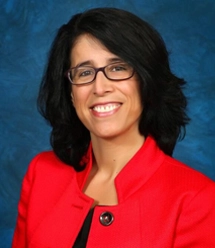
Sana Karam, MD, PhD, professor and head of the Department of Radiation Oncology at Washington University School of Medicine in St. Louis, gave the first keynote of the meeting yesterday, titled Neoadjuvant Immunotherapy: A Road to Progress – How Far Can It Take Us? Dr. Karam, with specialties in head and neck and pancreatic cancers, presented analyses of key studies in neoadjuvant and adjuvant immunotherapy for head and neck cancer. Dr. Karam dedicated the keynote to Eddie Mendez, MD, MS, a surgeon and researcher who passed away from cancer in 2018, and whose mission was to save lives and spare patients negative effects. This critical and mindful approach was evident as Dr. Karam reviewed studies, acknowledged the critical findings, and then extended those building blocks a step further by extrapolating, “what more do we need to know based on what this study revealed?”
The studies included neoadjuvant immunotherapy trials, including KEYNOTE-689, looking at the impact of going from one to two cycles of neoadjuvant pembrolizumab. While exploring the cited improvements of going from one to two cycles of neoadjuvant pembrolizumab, including higher pathologic response rates, Dr. Karam noted that here and with other studies exploring emerging combination strategies, it is important to determine who was identifying the study endpoints. For the KEYNOTE study, one of the major challenges of BICR, when based solely on imaging, was that conclusions hinged upon blinded radiologists who did not have actual contact with the patient rather than upon clinical investigators. Also, the occurrence of surgery or lack thereof, or the involvement of chemo, may have contributed to unclear interpretations or ones that required more detailed analysis.
A common question upon completion of a study is where to go next. Appropriately, the study authors suggested: “We agree that a more granular analysis and future data from real-world clinical practice will be necessary to ensure that this regimen is yielding optimal outcomes for all eligible patients.”
Shifting gears, Dr. Karam encouraged the focus on thinking biology, specifically targeting immunosuppression. Both the tumor microenvironment and the systemic immune response are important to examine. She shared the example of Neoadjuvant aPD1+aCTLA4: Nivo/Ipi Signal seeking. Another example reflected the importance of defining the path CR, to focus on overall response. “If there is discordance between primary tumor response and nodal response, what is the impact on DFS?” In this instance, dichotomies responded in the primary but not in the nodes, which is important to explore further as they are the orchestrators of systemic immunity.
Dr. Karam reminded her fellow physicians that what we want to achieve can be summed up as the “eradication of disease with minimal toxicity.” Chronic inflammation can backfire with all the fractionations that are administered, and she identified the need to collect data that truly assesses the patient’s quality of life, including full staging data sets that disclose the clinical and pathologic stage.
Dr. Karam advised, “Don’t admit anything until data matures. Responses must be durable.” She left the audience with questions not to take for granted:
Dr. Karam concluded by acknowledging the importance of data, and shared her gratitude for the scientists, trial teams and patients involved in both the hard work at the bench and outside of it.
“This is the dawn of a new era and a step forward for us. However, this is a lot of therapy for our patients. I just think we need more data.”
Published February 20, 2026