
By Sung Jun Ma, MD, James Cancer Hospital and Solove Research Institute, Ohio State University Comprehensive Cancer Center
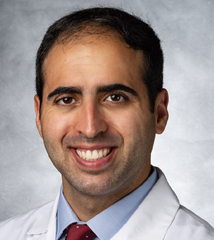
Michael Wotman, MD, and colleagues from Icahn School of Medicine at Mount Sinai presented the long-term results of their single-center prospective clinical trials evaluating the role of induction chemotherapy followed by response-adapted chemoradiation for locally advanced human papillomavirus (HPV)-positive oropharyngeal cancer. Given the increasing prevalence of HPV-positive oropharyngeal cancer and the very high rate of long-term survival of these patients, there is an unmet need to develop more personalized treatment approaches, report their long-term outcomes, and reduce long-term consequences of treatment.
In the Quarterback Trials, eligible patients were those with <20 pack-year smoking history and molecularly established HPV-positive oropharyngeal cancer. Excluded patients were those with current/active smoking status and metastatic cancer. All patients underwent three cycles of induction chemotherapy (docetaxel, cisplatin, and 5-fluorouracil). Patients with clinical response received chemoradiation with 56 Gy and weekly carboplatin. Those in the control arm and patients with an inadequate clinical response received chemoradiation with 70 Gy. Primary endpoints of these trials were 3- and 5-year locoregional relapse-free survival (LRRFS) and progression-free survival (PFS).
Among 62 patients who were screened, a total of 47 patients were considered responders after induction chemotherapy and received reduced-dose chemoradiation. Over 80% of patients had factors suggesting poor prognosis, such as extracapsular extension and advanced stage. Long-term outcomes were favorable (5-year LRRFS: 86.6%, 5-year OS: 89.1%). Disease progression was seen in eight patients, with six patients (13%) and two patients (4%) experiencing locoregional and distant failure, respectively. Of these eight patients, the majority had extracapsular extension and other factors indicating a poor prognosis. Treatment was generally well tolerated, and no patient required a feeding tube or experienced osteoradionecrosis during or after treatment.
This study highlights the feasibility and long-term efficacy of the personalized, response-adapted chemoradiation strategy. More importantly, Dr. Wotman’s Quarterback Trials demonstrated that even among patients with poor prognosis and aggressive disease characteristics, de-intensified treatments can be safely done in select patients. Such advanced patient selection is unique in the Quarterback Trials. Other patients with more than 10 pack-year smoking history and more locally advanced diseases, for example, might not have been eligible for de-escalation trials that primarily focused on those with favorable prognosis. Furthermore, the Quarterback Trials add a tremendous value to the growing body of existing literature on response-adapted and de-escalation treatment strategies by reporting five-year survival and oncologic outcomes with long-term follow up, since late recurrences can be seen in patients with HPV-positive oropharyngeal cancer.
It is also notable that only two patients experienced distant metastasis and two patients had in-field radiation-induced second primaries. Such finding highlights the critical role of induction chemotherapy regimens that may not only reduce the disease burden and radiation fields but also eliminate microscopic metastatic disease and reduced second primary tumors. However, Dr. Wotman and colleagues noted that careful patient selection is important and that further studies would be warranted for patients with extracapsular extension, since the majority of patients with disease progression had extracapsular extension in their trials.
In summary, Quarterback Trials led by Dr. Wotman and colleagues are significant for their contribution to our currently evolving response-adapted, de-escalation treatment approaches, especially for patients with poor prognosis and aggressive disease characteristics. The study’s findings provide guidance on the design of future clinical trials to further optimize personalized medicine in this challenging patient population.
Published February 21, 2026